
1
—
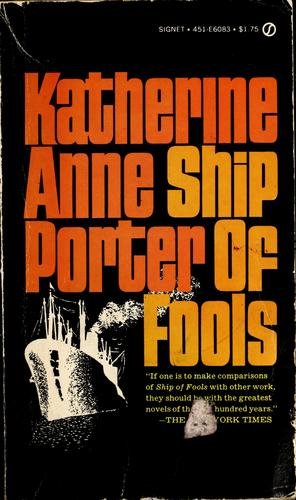
SHIP OF FOOLS
Katherine Anne Porter

by Anne Morrow Lindbergh · Harcourt, Brace
A June wedding sets the scene for Anne Morrow Lindbergh’s bestselling novel, Dearly Beloved. The ceremony is a great moment during which the “gathered together” survey not just this couple, this occasion, but their own lives, hopes, and fears. As the family and guests follow the familiar marriage service, they are stirred to new insights—on love, on marriage, and on all the stages of development involved. For the young and eager bridesmaid and best man, marriage still lies ahead; but for the mothers of the bride and groom, and for friends and relatives, the sight of the young couple and the words of the minister evoke more troubling thoughts and deeper questions. Anne Morrow Lindbergh wisely chose the framework of a wedding as a meditation on togetherness to contrast the questions she contemplated on solitude in her bestselling classic Gift from the Sea. The novel's structure also gave her scope for her reflections—some of them autobiographical—and intuitions about the most crucial of human relationships, reflections she calls “a theme and variations.” This classic book, first published in 1962 and long out of print, illuminates the truths behind marriage, not with easy optimism, but with perception, compassion, candor, and courage.
by Irving Wallace · Simon & Schuster
A writer in Stockholm who is to accept the Nobel Prize becomes involved in a spy plot to kidnap a scientist.
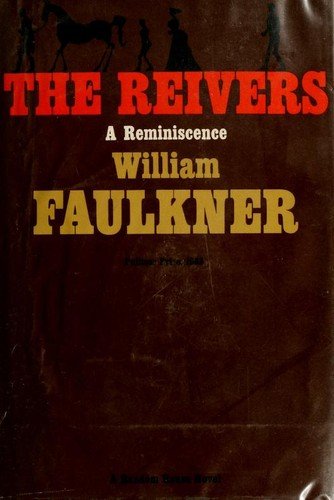
by William Faulkner · Random House
The Reivers: A Reminiscence, published in 1962, is the last novel by the American author William Faulkner. The bestselling novel was awarded the Pulitzer Prize for Fiction in 1963. Faulkner previously won this award for his book A Fable, making him one of only four authors to be awarded it more than once. Unlike many of his earlier works, it is a straightforward narration and eschews the complicated literary techniques of his more well known works. It is a picaresque novel, and as such may seem uncharacteristically lighthearted given its subject matter. For these reasons, The Reivers is often ignored by Faulkner scholars or dismissed as a lesser work. In the early 20th century, an 11-year-old boy named Lucius Priest (a distant cousin of the McCaslin/Edmonds family Faulkner wrote about in Go Down, Moses) somewhat unwittingly gets embroiled in a plot to go to Memphis with dimwitted family friend and manservant Boon Hogganbeck. Boon steals (reives, thereby becoming a reiver) Lucius' grandfather's car, one of the first cars in Yoknapatawpha County. They discover that Ned McCaslin, a black man who works with Boon at Lucius' grandfather's stables, has stowed away with them (Ned is also a blood cousin of the Priests). When they reach Memphis, Boon and Lucius stay in a boarding-house (brothel). Miss Reba, the madam, and Miss Corrie, Boon's favorite girl, are appalled to see that Boon has brought a child. In fact, Corrie's nephew Otis, an ill-mannered and off-putting boy about Lucius' age, is already staying there. In the evening, Otis reveals that Corrie (whose real name is Everbe Corinthia) used to prostitute herself in their old town, and he would charge men to watch her through a peephole. Outraged at his conduct, Lucius fights Otis, who cuts his hand with a pocketknife. Boon breaks up the fight but Everbe is so moved by Lucius' chivalry that she decides to stop whoring. Later, Ned returns to the boarding-house and reveals he traded the car for a supposedly lame racehorse. Corrie, Reba, Ned, Boon and Lucius hatch a scheme to smuggle the horse by rail to a nearby town, Parsham, to race a horse it has lost to twice already. Ned figures that everyone in town will bet against the horse and he can win enough money to buy back the car; he claims to have a secret ability to make the horse run. Corrie uses another client who works for the railroad, Sam, to get them and the horse on a night train. In town, Ned takes Lucius to stay with a black family while they practice for the horse race. Unfortunately, the local lawman named Butch finds them out and attempts to extort sexual favors from Corrie to look the other way. Reba is able to send him away by claiming she will reveal to the town that he intentionally ordered two prostitutes, angering his constituency.

by C.S. Forester · Little, Brown and Company
The Third Horatio Hornblower Tale of the Sea April 1803, and the Peace of Amiens is failing as Horatio Hornblower takes a sloop on a vital reconnaissance mission . . . On the day of his marriage to Maria, Hornblower is ordered to take the Hotspur and head for Brest - war is coming and Napoleon will not catch His Majesty's navy with its britches round its ankles. With thoughts of his new life as a husband intruding on his duties, Hornblower must prove himself to be not only the most capable commander in the fleet, but also its most daring if he is to stop the French gaining the upper hand. This is the third of eleven books chronicling the adventures of C. S. Forester's inimitable nautical hero, Horatio Hornblower. Featuring an exclusive introduction by Bernard Cornwell, creator of Sharpe 'A master of the genre' New York Times Book Review

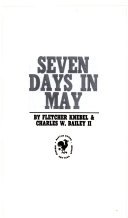
Historical bestseller data sourced from the New York Times Book Review, archived by Hawes Publications.