1
—
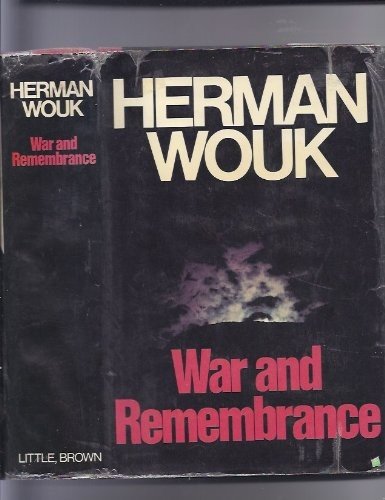
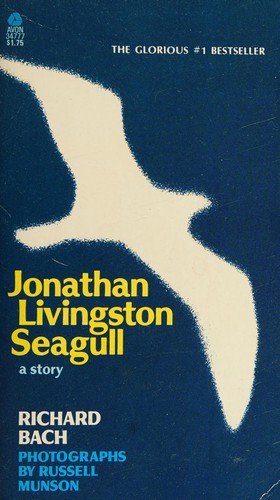
JONATHAN LIVINGSTON SEAGULL
Richard Bach
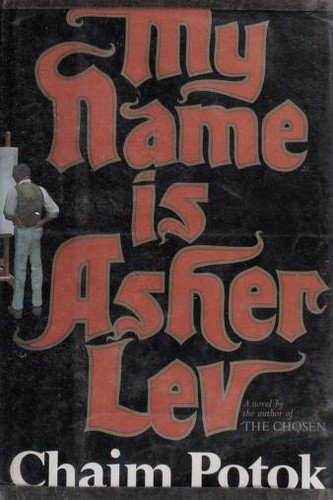

by Taylor Caldwell · Doubleday
Joseph Armagh is a poor Irish immigrant who is determined to create a better life for his family. He arrives in America in the mid-19th century. Through personal struggle, heartache and perseverance, he becomes one the the wealthest and most powerful men in the country.
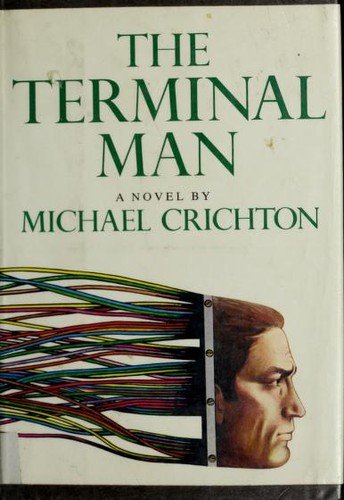
by Michael Crichton · Alfred A. Knopf
Harry Benson is prone to violent, uncontrollable seizures and is under police guard after attacking two people. Dr. Roger McPherson, head of the prestigious Neuropsychiatric Research Unit at University Hospital in Los Angeles, is convinced he can cure Benson through a procedure called Stage Three. During this highly specialized experimental surgery, electrodes will be place in the patient's brain, sending monitored, soothing pulses to its pleasure canyons. Though the operation is a success, there is an unforeseen development. Benson learns how to control the pulses and is increasing their frequency. He escapes -- a homicidal maniac loose in the city -- and nothing will stop his murderous rampages or impede his deadly agenda.
by Fletcher Knebel · Doubleday and Company, Inc
Roman om en ganske ukendt mand, der bliver amerikansk præsidentkandidat

by Eudora Welty · Random House
“It is easy to praise Eudora Welty,” as Robert Penn Warren has written, “but it is not so easy to analyze the elements in her work that make it so easy—and such a deep plea-sure—to praise. To say that may, indeed, be the highest praise, for it implies that the work, at its best, is so fully created, so deeply realized, and formed with such apparent in-nocence that it offers only itself, in shining unity.” The Optimist’s Daughter is Miss Welty’s work at its best, and reconfirms Mr. Warren’s general tribute, including the difficulty of analysis: Laurel Hand, long absent from the South, comes from Chicago to New Orleans, where her father dies after surgery. With Fay, the stupid new young wife of her father, Laurel returns to her former Mississippi home and stays a few days after the funeral for reunions with old friends. In a night alone in the house she grew up in, she confronts elements of the past and comes to a better understanding of it and of herself and her parents. The simplicity of the story belies its universal implications. This is a story of “the great interrelated family of those who never know the meaning of what happened to them.” With unsurpassed artistry Miss Welty shows us Laurel’s struggle to come to terms with her father’s death and with the life of the small Mississippi town he was so intimately involved with. In trying to deal with people who, like Fay, never even care to un-derstand what has happened to them, Laurel realizes that she too has kept her distance from a shared past. Like so many today, Laurel has lived in a city where she survives by avoiding any real involvement with those around her. It is only the shock of her father’s death that leads her to new insights into the relationship between love and death and memory. Certainly this book will be a rewarding experience to readers of Miss Welty’s earlier work. Newcomers will discover its many dimensions and great substance: the large cast of characters and the complexity of their relationships, the rich humor and subtlety of dialogue that reveals without describing, the wideness of scope compressed within the boundaries of a short novel, the wisdom and discernment that underlie the author’s vision of human life.
Historical bestseller data sourced from the New York Times Book Review, archived by Hawes Publications.