1
↑1
MINE ENEMY GROWS OLDER
Alexander King
by Harry Lewis Golden · World Publishing Co
* First book to comprehensively examine the War on Terror's impact on civil society * Contributors include well-known scholars in IR, political science and security studies Following George W. Bush's declaration of a global War on Terror in the wake of the September 11 attacks, political leaders around the world introduced a swath of counter-terrorist legislation and measures. Often hastily rushed in, not least to satisfy perceived public demand for a strong state response, such extraordinary laws and measures are riddled with ambiguity and trespass unashamedly on basic democratic rights. In many countries the introduction of such measures has fuelled a climate of fear and suspicion, damaging the efforts of civil society actors. This edited volume investigates the convergence of aid and security objectives following the September 11 attacks. It explores the effects of this convergence on civil society spaces, actors and organizations and analyzes the impact of counter-terrorist legislation, measures, discourses and practices on civil societies in a range of political contexts. It proposes that the securitization of aid that was already underway in the 1990s has accelerated in the post-9/11 world. The bulk of the literature on civil society and development relates to the golden era of the 1990s. Civil Society under Strainbrings the discussion into this newly altered landscape.
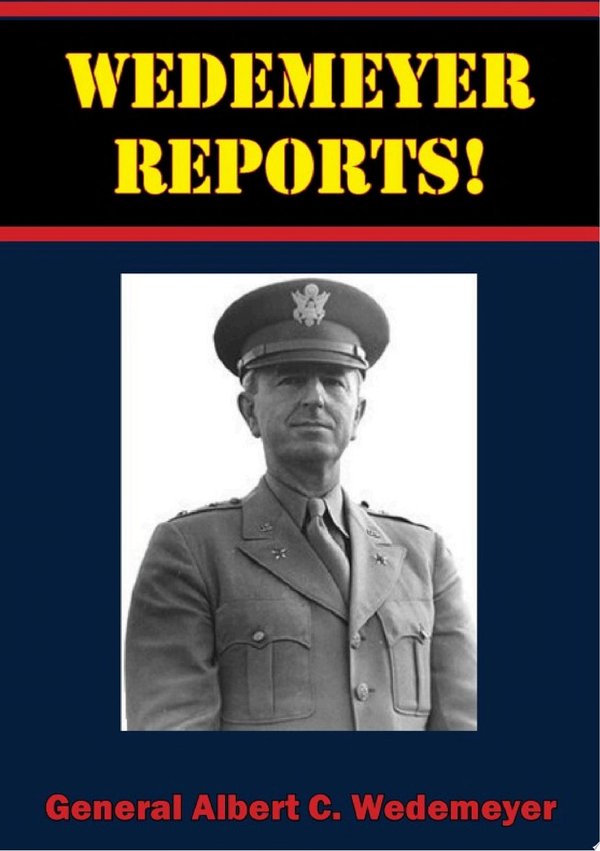
by General Albert C. Wedemeyer · Henry Holt and Company
As the chief planner for General Marshall, and co-author of the Victory Plan, General Wedemeyer had a truly significant hand in shaping and directing the Allied War effort against the Fascist powers. In these brilliant, excellently written memoirs he reveals the planning and execution of Grand Strategy on a global scale that toppled Hitler, Mussolini and Tojo. ""The Second World War," says historian Walter Millis, "was administered."...As a war planner in Washington from 1940 into 1943 I was intimately involved in an attempt to see the war whole—and even after I had moved on to Asia, where I served successively on Lord Louis Mountbatten's staff in India and as U.S. commander in the China Theater, I was still close to the problems of adapting Grand Strategy to a conflict of global dimensions. It was inevitable, then, that the subject of Grand Strategy should predominate in this book. I was not deprived of my own share of war experience from close up, but my most strenuous battles were those of the mind—of trying, as we in Washington's planning echelons saw it, to establish a correct and meaningful Grand Strategy which would have resulted in a fruitful peace and a decent post-war world. There were many obstacles in the way of developing a meaningful strategy, of assuring that our abundant means, material and spiritual, would be used to achieve worthy human ends. First, there was the pervasive influence of the Communists, who had their own plans for utilizing the war as a springboard to world domination. Second, there was the obstinacy of that grand old man, Winston Churchill, who, as we soldiers felt, could never reconcile his own concepts of Grand Strategy with sound military decisions. Because we had to contend with the machinations of Stalin on the one hand and with the bulldog tenacity of Churchill on the other, this book has had to be harsh in some of its personal assessments."-Foreword
Historical bestseller data sourced from the New York Times Book Review, archived by Hawes Publications.