1
—
THE ROTHSCHILDS
Frederic Morton

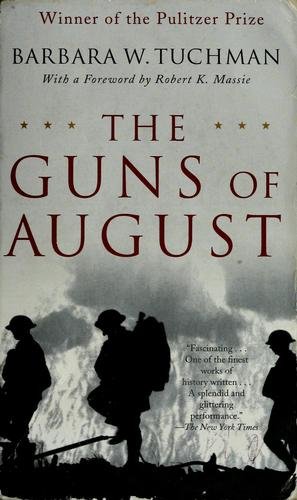
by Barbara W. Tuchman · Charles Scribner's Sons
"More dramtatic than fiction ... THE GUNS OF AUGUST is a magnificent narrative--beautifully organized, elegantly phrased, skillfully paced and sustained ... The product of painstaking and sophisticated research." CHICAGO TRIBUNE Historian and Pulitzer Prize-winning author Barbara Tuchman has brought to life again the people and events that led up to World War I. With attention to fascinating detail, and an intense knowledge of her subject and its characters, Ms. Tuchman reveals, for the first time, just how the war started, why, and why it could have been stopped but wasn't. A classic historical survey of a time and a people we all need to know more about, THE GUNS OF AUGUST will not be forgotten.
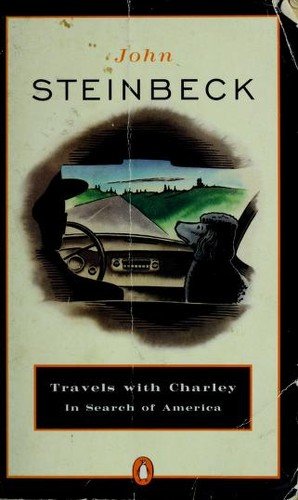
by John Steinbeck · Viking Press
Travels with Charley: In Search of America is a 1962 travelogue written by American author John Steinbeck. It depicts a 1960 road trip around the United States made by Steinbeck, in the company of his standard poodle Charley. Steinbeck wrote that he was moved by a desire to see his country on a personal level because he made his living writing about it. He wrote of having many questions going into his journey, the main one being "What are Americans like today?" However, he found that he had concerns about much of the "new America" he witnessed. Steinbeck tells of traveling throughout the United States in a specially made camper he named Rocinante, after Don Quixote's horse. His travels start in Long Island, New York, and roughly follow the outer border of the United States, from Maine to the Pacific Northwest, down into his native Salinas Valley in California across to Texas, through the Deep South, and then back to New York. Such a trip encompassed nearly 10,000 miles. According to Thom Steinbeck, the author's oldest son, the reason for the trip was that Steinbeck knew he was dying and wanted to see his country one last time. The younger Steinbeck has said he was surprised that his stepmother allowed his father to make the trip; his heart condition meant he could have died at any time. Part One Steinbeck opened the book by describing his lifelong wanderlust and his preparations to rediscover the country he felt he had lost touch with after living in New York City and traveling in Europe for 20 years. He was 58 years old in 1960 and nearing the end of his career, but he felt that when he was writing about America and its people he "was writing of something [he] did not know about, and it seemed to [him] that in a so-called writer this is criminal" (p. 6). He bought a new GMC pickup truck, which he named Rocinante, and had it fitted with a custom camper-shell for his journey. At the last minute, he decided to take his wife's 10-year-old French Poodle Charley, with whom he has many mental conversations as a device for exploring his thoughts. He planned on leaving after Labor Day from his summer home in Sag Harbor on the eastern end of Long Island, but his trip was delayed about two weeks due to Hurricane Donna, which made a direct hit on Long Island. Steinbeck's exploits in saving his boat during the middle of the hurricane, which he details, foreshadow his fearless, or even reckless, state of mind and his courage in undertaking a long, arduous and ambitious cross-country road trip by himself. Part Two Steinbeck began his trip by traveling by ferry from Long Island to Connecticut, passing the U.S. Navy submarine base at New London where many of the new nuclear submarines were stationed. He talked to a sailor stationed on a sub who enjoyed being on them because "they offer all kinds of - future". Steinbeck credited uncertainty about the future to rapid technological and political changes. He mentioned the wastefulness of American cities and society and lamented the large amount of waste that resulted from everything being "packaged." Later he had a conversation with a New England farmer. The two concluded that a combination of fear and uncertainty about the future limited their discussion of the coming election between Richard Nixon and John F. Kennedy. Steinbeck enjoyed learning about people by eating breakfast in roadside restaurants and listening to morning radio programs, though he noted that, "If 'Teen-Age Angel' [sic] is top of the list in Maine, it is the top of the list in Montana" (35), showing the ubiquity of pop culture brought on by Top 40 radio and mass media technologies.
by Lewis L. Strauss · Doubleday
From his personal vantage point the head of the A.E.C. tells the stories of major moments in history -- World War I to the threat of World War III.
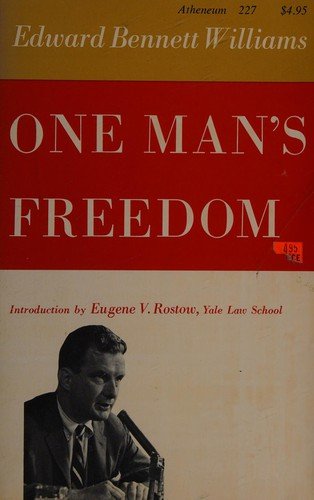
by Edward Bennett Williams · Atheneum
Includes Williams' opinions on congressional investigations, electronic eavesdropping, the Fifth Amendment, due process, capital punishment, insanity defense, censorship, and the Civil Rights Movement.
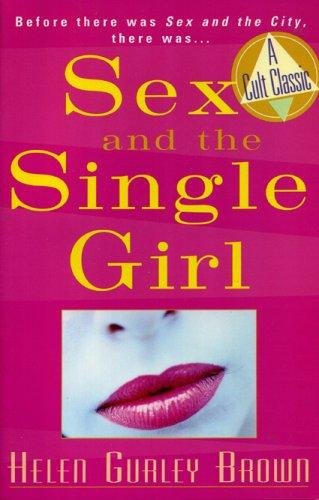
by Helen Gurley Brown · Bernard Geis Associates
Provides single women with advice on such topics as dealing with men, sex, career success, becoming sexy, making money, and staying healthy.

by Anna Chennault · Paul S. Eriksson
This is a new release of the original 1962 edition.
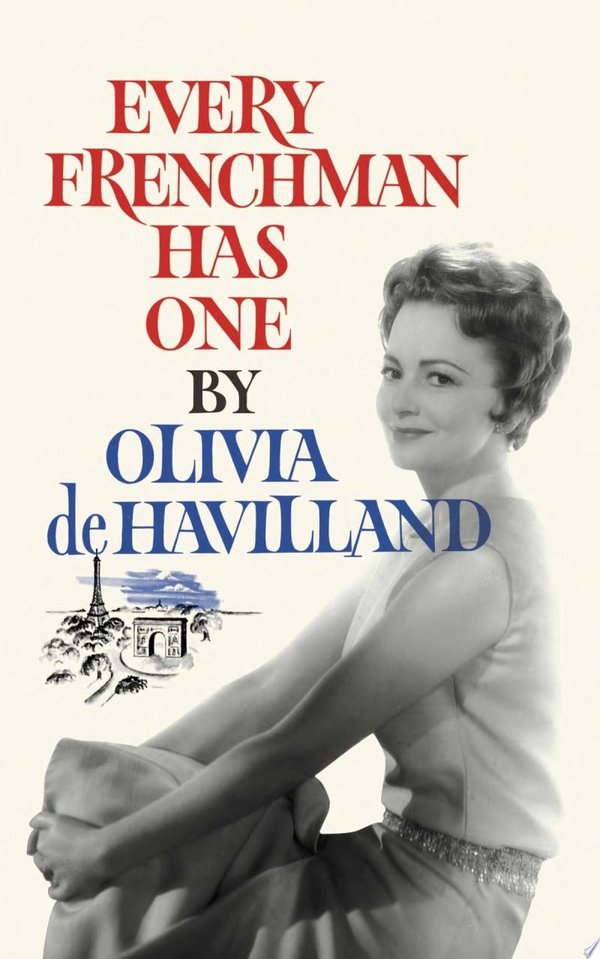
by Olivia De Havilland · Random House
Back in print for the first time in decades—and featuring a new interview with the author, in celebration of her centennial birthday—the delectable escapades of Hollywood legend Olivia de Havilland, who fell in love with a Frenchman—and then became a Parisian In 1953, Olivia de Havilland—already an Academy Award-winning actress for her roles in To Each His Own and The Heiress—became the heroine of her own real-life love affair. She married a Frenchman, moved to Paris, and planted her standard on the Left Bank of the River Seine. It has been fluttering on both Left and Right Banks with considerable joy and gaiety from that moment on. Still, her transition from Hollywood celebrity to parisienne was anything but easy. And in Every Frenchman Has One, her skirmishes with French customs, French maids, French salesladies, French holidays, French law, French doctors, and above all, the French language, are here set forth in a delightful and amusing memoir of her early years in the “City of Light.” Paraphrasing Caesar, Ms. de Havilland says, “I came. I saw. I was conquered.”
Historical bestseller data sourced from the New York Times Book Review, archived by Hawes Publications.