1
—
ALL I REALLY NEED TO KNOW I LEARNED IN KINDERGARTEN
Robert Fulghum
ALL I REALLY NEED TO KNOW I LEARNED IN KINDERGARTEN
by Robert Fulghum · Villard
34 wks at #1 · 24 on list
by Robert Fulghum · Villard

by Stephen W. Hawking · Bantam
Stephen Hawking has earned a reputation as the most brilliant theoretical physicist since Einstein. In this landmark volume, Professor Hawking shares his blazing intellect with nonscientists everywhere, guiding us expertly to confront the supreme questions of the nature of time and the universe. Was there a beginning of time? Will there be an end? Is the universe infinite or does it have boundaries? From Galileo and Newton to modern astrophysics, from the breathtakingly cast to the extraordinarily tiny, Professor Hawking leads us on an exhilarating journey to distant galaxies, black holes, alternate dimensions--as close as man has ever ventured to the mind of God. From the vantage point of the wheelchair from which he has spent more than twenty years trapped by Lou Gehrig's disease, Stephen Hawking has transformed our view of the universe. Cogently explained, passionately revealed, "A Brief History of Time is the story of the ultimate quest for knowledge: the ongoing search for the tantalizing secrets at the heart of time and space.
by Joe McGinniss · Putnam
The sordid, #1 New York Times bestselling true crime story of adultery, addiction, gambling debt, and murder in a privileged suburban town—from author and journalist Joe McGinniss. The Marshalls were the model family of Tom’s River, New Jersey, living the American dream and seemingly in possession of all that money could buy. Rob Marshall, a successful insurance broker, was the big breadwinner, king of the country club set. Maria Marshall was his stunningly beautiful wife and the perfect mom to their three great kids. Then one night while the couple drove home from Atlantic City, Rob, his head bloodied, reported Maria had been brutally slain. Sympathy poured in—until disquieting facts began to surface…and the true story of adultery, gambling, drugs and murder tore the mask off Rob Marshall and the blinders off the town that thought he could do no wrong.

by Joseph Wambaugh · Morrow
"The true story of the Narborough village murders," involving the first use of genetic fingerprinting in criminal investigation.
by John Allen Paulos · Hill & Wang
This New York Times bestseller shows how understanding probability and statistics can change your life: "Brief, witty, and full of practical applications." — Time Magazine Why do even well-educated people understand so little about mathematics? And what are the costs of our innumeracy? John Allen Paulos argues that our inability to deal rationally with very large numbers and the probabilities associated with them results in misinformed governmental policies, confused personal decisions, and an increased susceptibility to pseudoscience of all kinds. Innumeracy lets us know what we're missing, and how to do something about it. Sprinkling his discussion of numbers and probabilities with quirky stories and anecdotes, Paulos ranges freely over many aspects of modern life, from contested elections to sports stats, from stock scams and newspaper psychics to diet and medical claims, sex discrimination, insurance, lotteries, and drug testing. Readers of Innumeracy will be rewarded with scores of astonishing facts, a fistful of powerful ideas, and, most important, a clearer, more quantitative way of looking at their world. "This admirable little book [can be read] in two hours. Chances are that they could be among the most enlightening and even profitable 120 minutes you ever spent." — Chicago Sun-Times "Like carrying on a conversation with an engaging, articulate math whiz who easily shifts from the profound to the funny." — Business Week "Paulos makes numbers, probability, and statistics perform like so many trained seals for the reader's entertainment." — Chicago Tribune

by Robert MacNeil · Viking Press
MacNeil's autobiography re-creates the world of his youth and the experiences that were opened up to him through his love of words. His delight and passion for the music and magic of language, have enabled MacNeil to transmute it into a work of art. Photos.
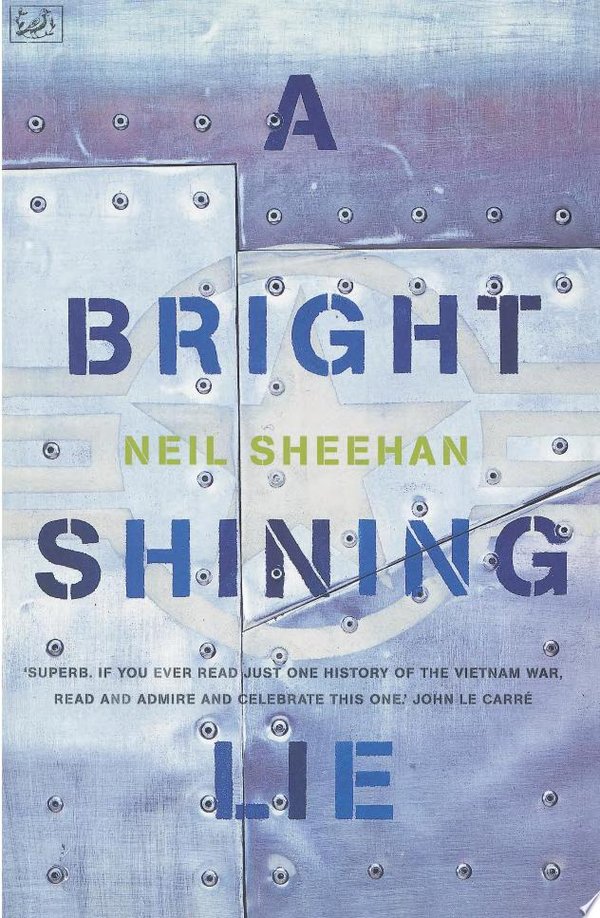
by Neil Sheehan · Random House
'Superb. If you ever read just one history of the Vietnam war, read and admire and celebrate this one ' John le Carré WINNER OF THE NATIONAL BOOK AWARD AND THE PULITZER PRIZE FOR NON-FICTION Outspoken, professional and fearless, Lt. Col. John Paul Vann went to Vietnam in 1962, full of confidence in America's might and right to prevail. He was soon appalled by the South Vietnamese troops' unwillingness to fight, by their random slaughter of civilians and by the arrogance and corruption of the US military. He flouted his supervisors and leaked his sharply pessimistic - and, as it turned out, accurate - assessments to the US press corps in Saigon. Among them was Sheehan, who became fascinated by the angry Vann, befriended him and followed his tragic and reckless career. Sixteen years in the making, A Bright Shining Lie is an eloquent and disturbing portrait of a man who in many ways personified the US war effort in Vietnam, of a solider cast in the heroic mould, an American Lawrence of Arabia. Blunt, idealistic, patronising to the Vietnamese, Vann was haunted by a shameful secret - the fact that he was the illegitimate son of a 'white trash' prostitute. Gambling away his career, Vann left the army that he loved and returned to Vietnam as a civilian in the pacification programme. He rose to become the first American civilian to wield a general's command in war. When he was killed in 1972, he was mourned at Arlington cemetery by leading political figures of the day. Sheehan recounts his astonishing story in this intimate and intense meditation on a conflict that scarred the conscience of a nation.
by Judith S. Wallerstein and Sandra Blakeslee · Ticknor & Fields
Examines the results of a ten-year study of the long term effects of divorce on American families, parents, children, courtship, marriage, and society.
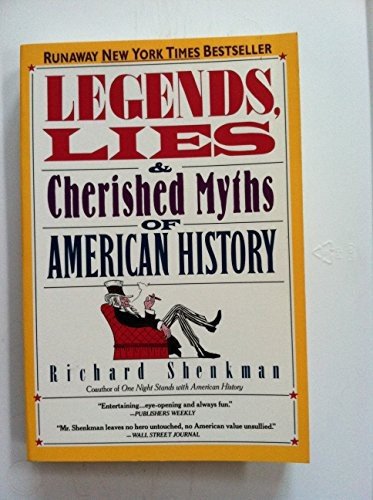
by Richard Shenkman · Morrow
A collection of background information on numerous legends from American history.
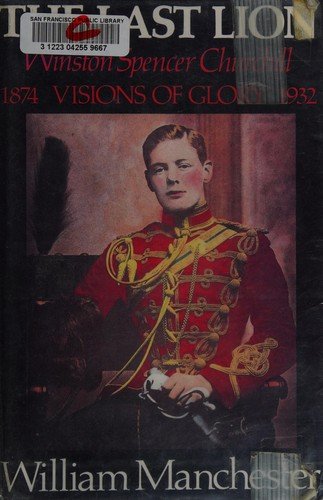
by William Manchester · Little, Brown
The first volume in William Manchester's masterful, magnum opus account of Winston Churchill's life. The Last Lion: Visions of Glory follows the first fifty-eight years of Churchill's life--the years that mold him into the man who will become one of the most influential politicians of the twentieth century. In this, the first volume, Manchester follows Churchill from his birth to 1932, when he began to warn against the re-militarization of Germany. Born of an American mother and the gifted but unstable son of a duke, his childhood was one of wretched neglect. He sought glory on the battlefields of Cuba, Sudan, India, South Africa and the trenches of France. In Parliament he was the prime force behind the creation of Iraq and Jordan, laid the groundwork for the birth of Israel, and negotiated the independence of the Irish Free State. Yet, as Chancellor of the Exchequer he plunged England into economic crisis, and his fruitless attempt to suppress Gandhi's quest for Indian independence brought political chaos to Britain. Throughout, Churchill learned the lessons that would prepare him for the storm to come, and as the 1930's began, he readied himself for the coming battle against Nazism--an evil the world had never before seen.
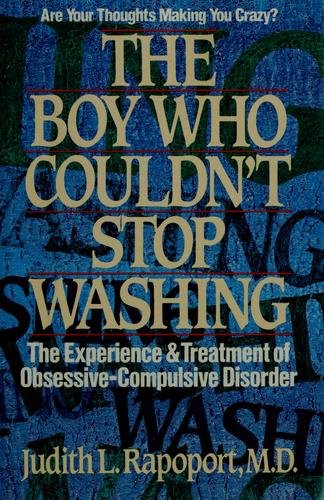
by Judith L. Rapoport · Dutton
Examines the symptoms and treatment of obsessive-compulsive disorders.

by Taylor Branch · Simon & Schuster
Chronicles the civil rights struggle from the twilight of the Eisenhower years through the assassination of President Kennedy.
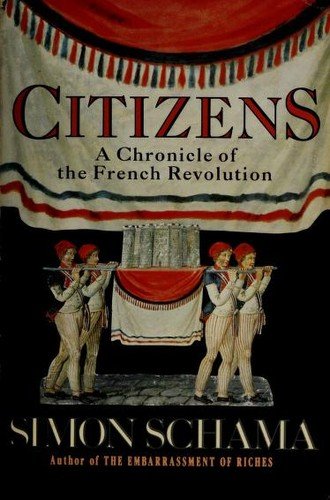
by Simon Schama · Knopf
Considers the fullest resources of social, cultural, and political history and includes accounts of private and public lives to help see the reality of the revolution.
Historical bestseller data sourced from the New York Times Book Review, archived by Hawes Publications.