1
—
AN HOUR BEFORE DAYLIGHT
Jimmy Carter
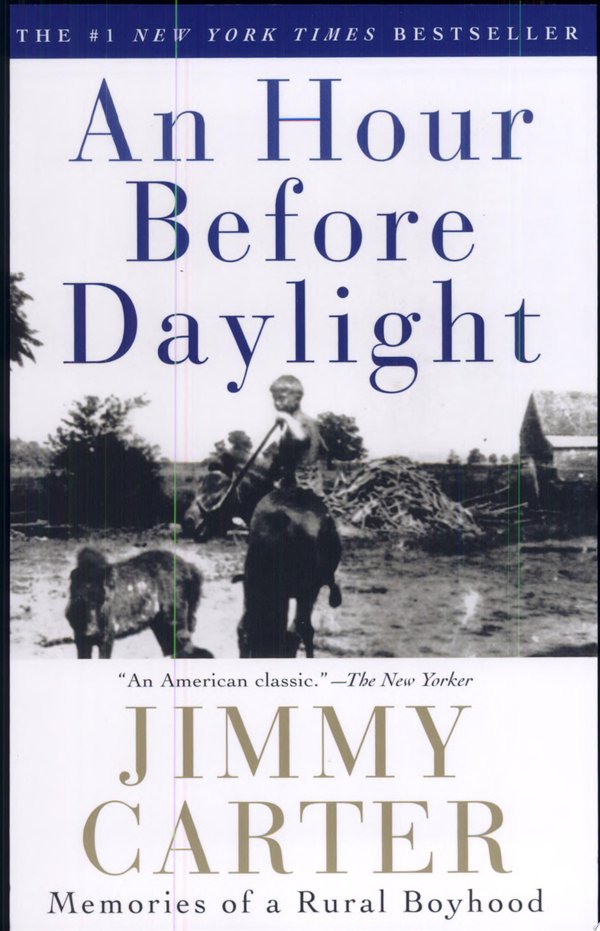
AN HOUR BEFORE DAYLIGHT
by Jimmy Carter · Simon & Schuster
5 wks at #1 · 3 on list
Jimmy Carter re-creates his boyhood on a Georgia farm.
by Jimmy Carter · Simon & Schuster
Jimmy Carter re-creates his boyhood on a Georgia farm.
by Jerri Nielsen with Maryanne Vollers · Talk Miramax/Hyperion
The inhabitants of the Amundsen-Scott South Pole Research Station at Antarctica are known as Polies. They live in almost total darkness for nine months of the year, in temperatures as low as 100 degrees below zero, with no way in or out before the spring. This is Jerri Nielsen's account of her one year sabbatical there. She was the physician for 41 researchers, construction workers and support staff, and it was her job to keep the Polies mentally and physically fit in a hostile environment.
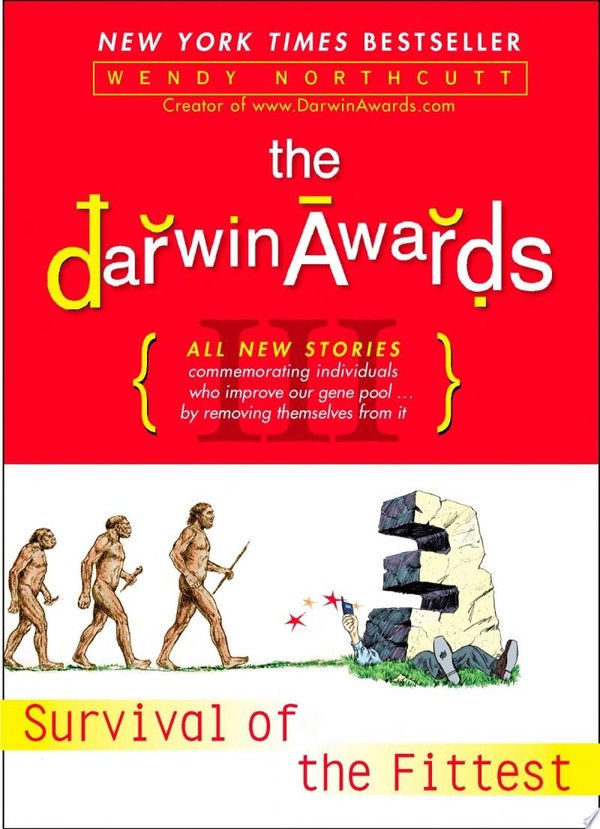
by Wendy Northcutt · Dutton
The hilarious New York Times bestselling phenomenon and the perfect funny gift! Honoring those who improve our gene pool by inadvertently removing themselves fromit, The Darwin Awards III includes more than one hundred brand new, hilariously macabre mishaps and misadventures. From a sheriff who inadvertently shot himself twice, to the insurance defrauder who amputated his leg with a chainsaw; from a farmer who avoided bee stings by sealing his head in a plastic bag to the man crushed by the branch he just trimmed, The Darwin Awards III proves again that when it comes to stupidity, no species does it like we do. Featuring scientific and safety discussions and filled with illustrations depicting inspiring examples of evolution in action, The Darwin Awards III shows once more how uncommon common sense still is.
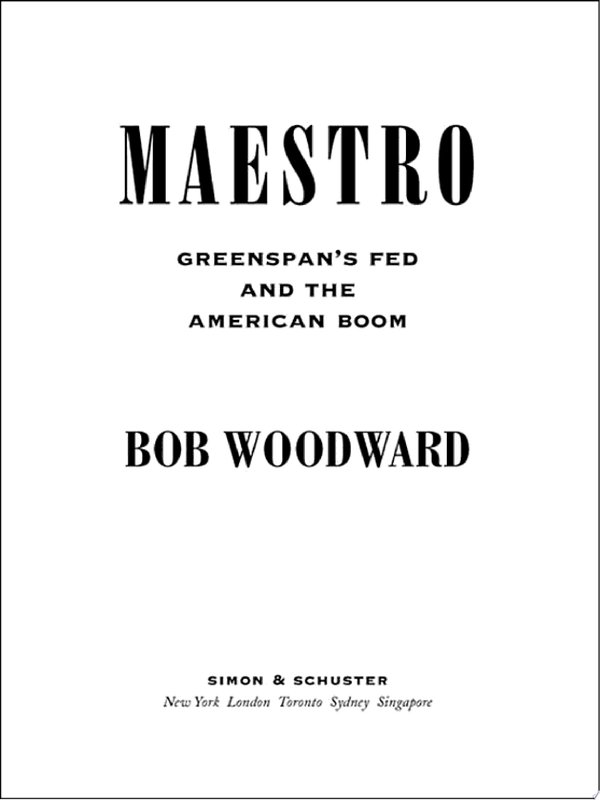
by Bob Woodward · Simon & Schuster
Who is responsible? From the President to the Federal Reserve Chairman, Alan Greenspan to Wall Street to the role of the emerging technologies, Woodward uses his exhaustive investigative technique to reveal the ideas and politics that have changed the lives of millions of people and established the United States as the world's preeminent power. He shows why America has found itself in this exalted position. How it might have been different and when and why it might end.
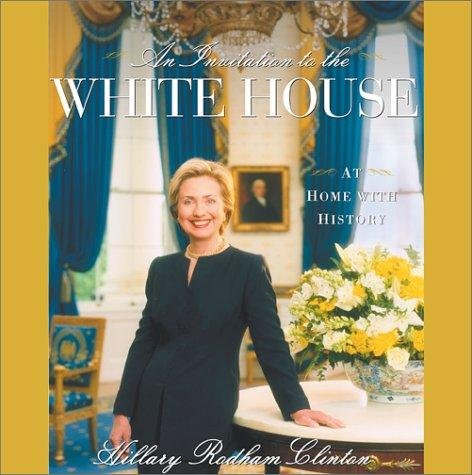
by Hillary Rodham Clinton · Simon & Schuster
The First Lady celebrates the history, culture, and food of the White House, in an illustrated volume that captures the significance of this great house in American life.
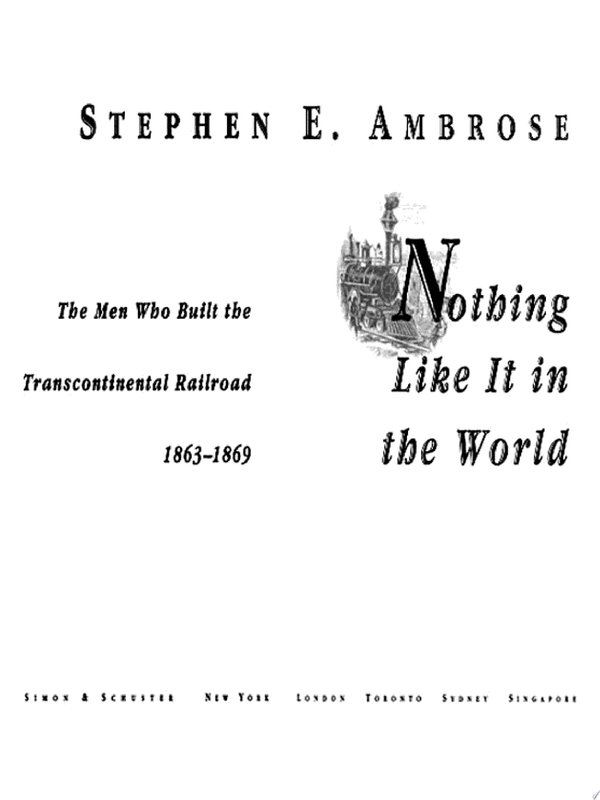
by Stephen E. Ambrose · Simon & Schuster
NOTHING LIKE IT IN THE WORLD is the story of the men who built the transcontinental railroad – the investors who risked their businesses and money; the enlightened politicians who understood its importance; the engineers and surveyors who risked, and sometimes lost, their lives; and the Irish and Chinese immigrants, the defeated Confederate soldiers, and the other labourers who did the backbreaking and dangerous work on the tracks. The US government pitted two companies – the Union Pacific and the Central Pacific Railroads – against each other in a race for funding, encouraging speed over caution. Locomotives, rails and spikes were shipped from the East through Panama or around South America to the West, or lugged across the country to the Plains. In Ambrose's hands, this enterprise, with its huge expenditure of brainpower, muscle and sweat, comes vibrantly to life.
by Joseph J. Ellis · Knopf
An illuminating study of the intertwined lives of the founders of the American republic--John Adams, Aaron Burr, Benjamin Franklin, Alexander Hamilton, Thomas Jefferson, James Madison, and George Washington. During the 1790s, which Ellis calls the most decisive decade in our nation's history, the greatest statesmen of their generation--and perhaps any--came together to define the new republic and direct its course for the coming centuries. Ellis focuses on six discrete moments that exemplify the most crucial issues facing the fragile new nation: Burr and Hamilton's deadly duel, and what may have really happened; Hamilton, Jefferson, and Madison's secret dinner, during which the seat of the permanent capital was determined in exchange for passage of Hamilton's financial plan; Franklin's petition to end the "peculiar institution" of slavery--his last public act--and Madison's efforts to quash it; Washington's precedent-setting Farewell Address, announcing his retirement from public office and offering his country some final advice; Adams's difficult term as Washington's successor and his alleged scheme to pass the presidency on to his son; and finally, Adams and Jefferson's renewed correspondence at the end of their lives, in which they compared their different views of the Revolution and its legacy. In a lively and engaging narrative, Ellis recounts the sometimes collaborative, sometimes archly antagonistic interactions between these men, and shows us the private characters behind the public personas: Adams, the ever-combative iconoclast, whose closest political collaborator was his wife, Abigail; Burr, crafty, smooth, and one of the most despised public figures of his time; Hamilton, whose audacious manner and deep economic savvy masked his humble origins; Jefferson, renowned for his eloquence, but so reclusive and taciturn that he rarely spoke more than a few sentences in public; Madison, small, sickly, and paralyzingly shy, yet one of the most effective debaters of his generation; and the stiffly formal Washington, the ultimate realist, larger-than-life, and America's only truly indispensable figure. Ellis argues that the checks and balances that permitted the infant American republic to endure were not primarily legal, constitutional, or institutional, but intensely personal, rooted in the dynamic interaction of leaders with quite different visions and values. Revisiting the old-fashioned idea that character matters, Founding Brothers informs our understanding of American politics--then and now--and gives us a new perspective on the unpredictable forces that shape history.

by Lance Armstrong with Sally Jenkins · Putnam
The #1 New York Times bestseller from the cancer survivor who became a four-time Tour de France champ. In 1996, young cycling phenom Armstrong discovered he had testicular cancer. In 1999, he won the Tour de France. Now he's a new father and a memoirist: with pluck, humility and verve, this volume covers his early life, his rise through the endurance sport world and his medical difficulties.
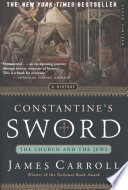
by James Carroll · Houghton Mifflin
The "monumental" New York Times bestseller in which a Catholic explores the problem of anti-Semitism through Church history ( The Washington Post). A Los Angeles Times Best Book of the Year and a New York Times Notable Book In this "masterly history" ( Time), National Book Award-winning author James Carroll maps the profoundly troubling two-thousand-year course of the Church's battle against Judaism and faces the crisis of faith it has provoked in his own life as a Catholic. More than a chronicle of religion, this dark history is the central tragedy of Western civilization, its fault lines reaching deep into our culture. The Church's failure to protest the Holocaust — the infamous "silence" of Pius XII — is only part of the story: the death camps, Carroll shows, are the culmination of a long, entrenched tradition of anti-Judaism. From Gospel accounts of the death of Jesus on the cross, to Constantine's transformation of the cross into a sword, to the rise of blood libels, scapegoating, and modern anti-Semitism, Carroll reconstructs the dramatic story of the Church's conflict not only with Jews but with itself. Yet in tracing the arc of this narrative, he implicitly affirms that it did not necessarily have to be so. There were roads not taken, heroes forgotten; new roads can be taken yet. Demanding that the Church finally face this past in full, Carroll calls for a fundamental rethinking of the deepest questions of Christian faith. Only then can Christians, Jews, and all who carry the burden of this history begin to forge a new future. "Carroll discusses the history of Christian-Jewish relations honestly, touchingly, and personally...Carroll investigates his own prejudices as a believing Christian, a former Catholic priest, and a long-time civil rights activist. As he unearths history (using all the best sources), he also encounters emotions he didn't realize he had and shows how his historical journey was also a personal pilgrimage of faith."— Booklist "A triumph."— Atlantic Monthly
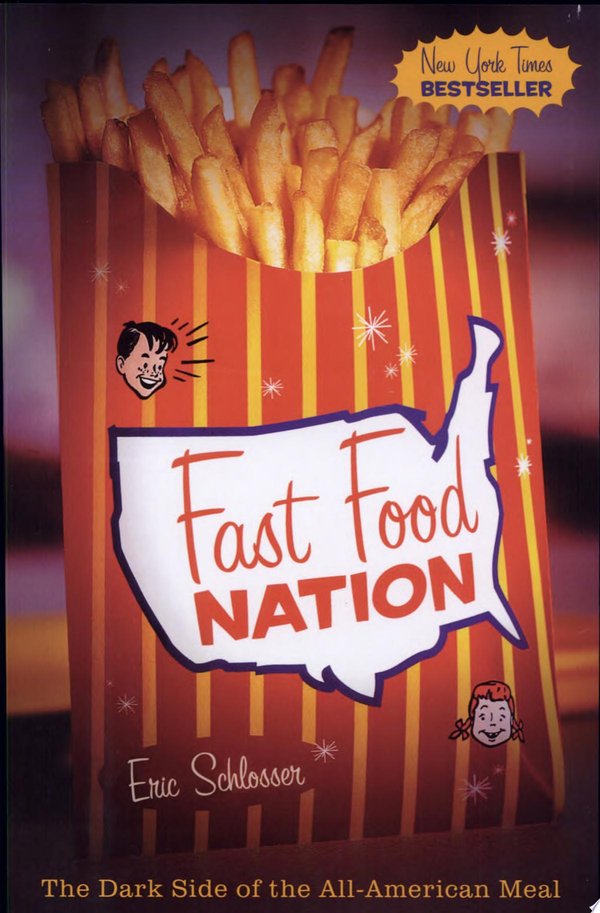
by Eric Schlosser · Houghton Mifflin
An exploration of the fast food industry in the United States, from its roots to its long-term consequences.

by James Bradley with Ron Powers · Bantam
Chronicles one of the bloodiest battles of World War II, focusing on the men who raised the flag at Iwo Jima.
by Tom Brokaw · Random House
In this superb book, Tom Brokaw goes out into America, to tell through the stories of individual men and women the story of a generation - America's citizen heroes and heroines who came of age during the Great Depression and the Second World War and went on to build modern America. This was a generation united by common values - by duty, honour, courage, service and love of family and country. Here you'll meet people like Charles Van Gorder, who set up during D-Day a MASH-like medical facility in the middle of the fighting, and then came home to create a clinic and hospital in his hometown. You'll hear ex-President George Bush talk about how, as a Navy Air Corps combat pilot, one of his assignments was to read the mail of the enlisted men under him, to be sure no sensitive military information would be compromised. You'll meet Trudy Elion, winner of the Nobel Prize in medicine, one of the many women in this book who found fulfilling careers in the changed society as a result of the war. And you'll meet Martha Putney, one of the first black women to serve in the newly formed WACs. In the spirit of Band of Brothers, The Greatest Generation tells the stories of ordinary men and women caught up in extraordinary events - individuals united by a common purpose - working, living and dying in the service of their country.
Historical bestseller data sourced from the New York Times Book Review, archived by Hawes Publications.