1
—
JOHN ADAMS
David McCullough
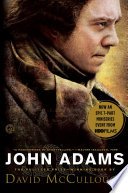
JOHN ADAMS
by David McCullough · Simon & Schuster
14 wks at #1 · 4 on list
Profiles John Adams, an influential patriot during the American Revolution who became the nation's first vice president and second president.
by David McCullough · Simon & Schuster
Profiles John Adams, an influential patriot during the American Revolution who became the nation's first vice president and second president.
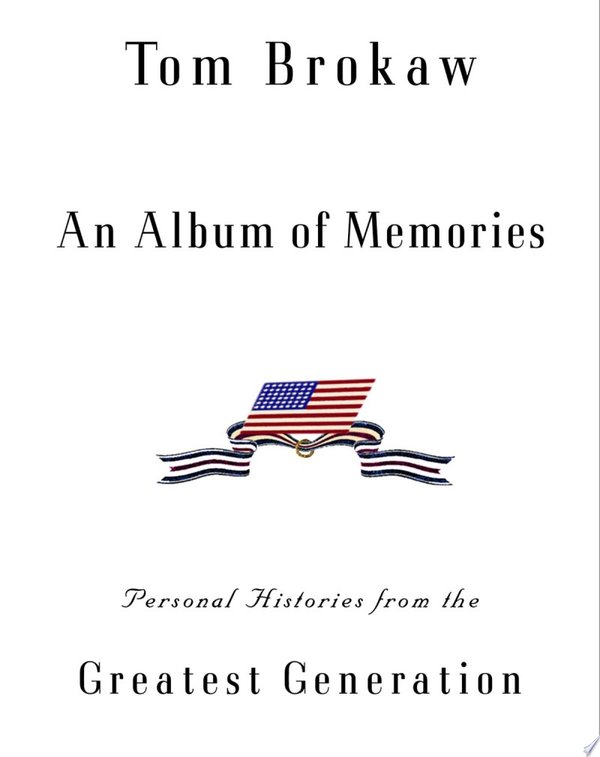
by Tom Brokaw · Random House
A seventeen-year-old who enlisted in the army in 1941 writes to describe the Bataan Death March. Other members of the greatest generation describe their war — in such historic episodes as Guadalcanal, the D-Day invasion, the Battle of the Bulge, and Midway — as well as their life on the home front. In this beautiful American family album of stories, reflections, memorabilia, and photographs, history comes alive and is preserved, in people’s own words and through photographs and time lines that commemorate important dates and events. Starting with the Depression and Pearl Harbor, on through the war in Europe and the Pacific, this unusual book preserves a people’s rich historical heritage and the legacy of the heroism of a nation.
by George Carlin · Hyperion
"The thinking person's comic offers a hilarious new collection of razor-sharp observations ..."--Page 4 of cover.
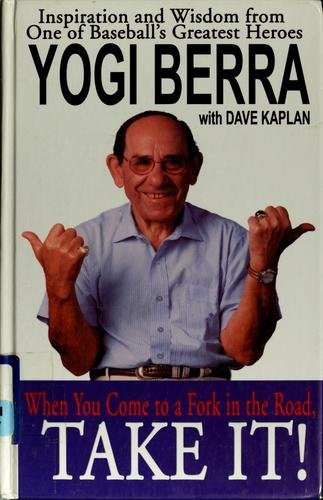
by Yogi Berra with Dave Kaplan · Hyperion
For: Ralph E. Glass.
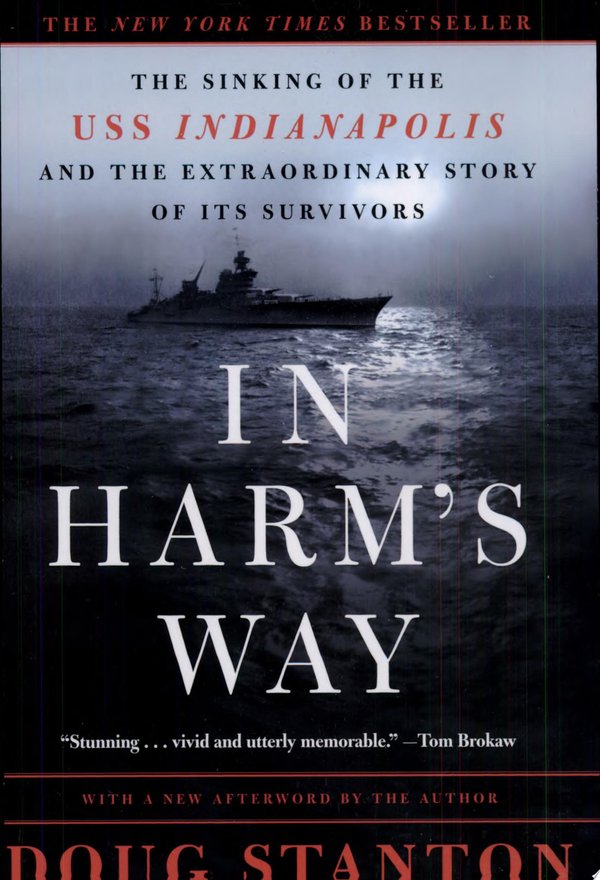
by Doug Stanton · Holt
A harrowing, adrenaline-charged account of America's worst naval disaster -- and of the heroism of the men who, against all odds, survived. On July 30, 1945, the USS Indianapolis was torpedoed in the South Pacific by a Japanese submarine. An estimated 300 men were killed upon impact; close to 900 sailors were cast into the Pacific Ocean, where they remained undetected by the navy for nearly four days and nights. Battered by a savage sea, they struggled to stay alive, fighting off sharks, hypothermia, and dementia. By the time rescue arrived, all but 317 men had died. The captain's subsequent court-martial left many questions unanswered: How did the navy fail to realize the Indianapolis was missing? Why was the cruiser traveling unescorted in enemy waters? And perhaps most amazing of all, how did these 317 men manage to survive? Interweaving the stories of three survivors -- the captain, the ship's doctor, and a young marine -- journalist Doug Stanton has brought this astonishing human drama to life in a narrative that is at once immediate and timeless. The definitive account of a little-known chapter in World War II history, In Harm's Way is destined to become a classic tale of war, survival, and extraordinary courage.
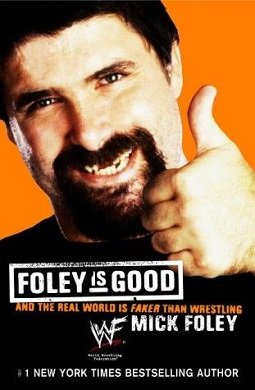
by Mick Foley · ReganBooks/ HarperCollins
The elves were running everywhere--they were loud and brash and rude, and Tommy Top, the tallest elf, was running in the nude. The elves were throwing toys and games, and to make things even worse, Billy Bop, the smallest elf, was teaching them to curse... What does Santa do when things get out of hand in his North Pole castle? He brings in the World Wrestling Federation Superstars! Mick Foley's Christmas Chaos is a hilarious modern classic with all the heartwarming magic of a cherished tradition. Riotously illustrated by Jerry "The King" Lawler, this new Christmas story is sure to delight children, wrestling fans, and readers of all ages. Make room on the shelf next to The Night Before Christmas and A Christmas Carol, because this Yuletide tale has attitude! Mick Foley--number one New York Times bestselling author, Hardcore Legend, and Commissioner of the World Wrestling Federation--crafts a delightful tale of mischief, mayhem, and the true meaning of Christmas. When the elves revolt against Santa and refuse to make any toys and the reindeer gang up on Rudolph as though they've joined DX, Santa Claus gives up hope that anyone these days has the true Christmas spirit. When the situation looks its bleakest, Mrs. Claus calls in the cavalry--Kane, Jericho, Val Venis, Jerry Lawler, Kurt Angle, Edge, an the rest of the Federation Superstars! How the wrestlers misbehave--making things even worse--and how one unexpected and unassuming person saves Christmas for the whole world is an unforgettable and uplifting story that will add good cheer to your holiday season year after year. Perfect for reading out loud near a crackl8ing fire or while tucked in at bedtime, Mick Foley's Christmas Chaos is sure to become a family tradition in your home.
by Joseph J. Ellis · Knopf
An illuminating study of the intertwined lives of the founders of the American republic--John Adams, Aaron Burr, Benjamin Franklin, Alexander Hamilton, Thomas Jefferson, James Madison, and George Washington. During the 1790s, which Ellis calls the most decisive decade in our nation's history, the greatest statesmen of their generation--and perhaps any--came together to define the new republic and direct its course for the coming centuries. Ellis focuses on six discrete moments that exemplify the most crucial issues facing the fragile new nation: Burr and Hamilton's deadly duel, and what may have really happened; Hamilton, Jefferson, and Madison's secret dinner, during which the seat of the permanent capital was determined in exchange for passage of Hamilton's financial plan; Franklin's petition to end the "peculiar institution" of slavery--his last public act--and Madison's efforts to quash it; Washington's precedent-setting Farewell Address, announcing his retirement from public office and offering his country some final advice; Adams's difficult term as Washington's successor and his alleged scheme to pass the presidency on to his son; and finally, Adams and Jefferson's renewed correspondence at the end of their lives, in which they compared their different views of the Revolution and its legacy. In a lively and engaging narrative, Ellis recounts the sometimes collaborative, sometimes archly antagonistic interactions between these men, and shows us the private characters behind the public personas: Adams, the ever-combative iconoclast, whose closest political collaborator was his wife, Abigail; Burr, crafty, smooth, and one of the most despised public figures of his time; Hamilton, whose audacious manner and deep economic savvy masked his humble origins; Jefferson, renowned for his eloquence, but so reclusive and taciturn that he rarely spoke more than a few sentences in public; Madison, small, sickly, and paralyzingly shy, yet one of the most effective debaters of his generation; and the stiffly formal Washington, the ultimate realist, larger-than-life, and America's only truly indispensable figure. Ellis argues that the checks and balances that permitted the infant American republic to endure were not primarily legal, constitutional, or institutional, but intensely personal, rooted in the dynamic interaction of leaders with quite different visions and values. Revisiting the old-fashioned idea that character matters, Founding Brothers informs our understanding of American politics--then and now--and gives us a new perspective on the unpredictable forces that shape history.

by Malika Oufkir and Michele Fitoussi · Talk Miramax/Hyperion
Twenty years in a desert jail.

by James Bradley with Ron Powers · Bantam
Chronicles one of the bloodiest battles of World War II, focusing on the men who raised the flag at Iwo Jima.

by Louis Menand · Farrar, Straus & Giroux
The New Yorker staff writer Louis Menand's The Metaphysical Club is the winner of the Pulitzer Prize for History. A national bestseller and "hugely ambitious, unmistakably brilliant" (Janet Maslin, New York Times) book about the creation of modern American thought. The Metaphysical Club was an informal group that met in Cambridge, Massachusetts, in 1872, to talk about ideas. Its members included Oliver Wendell Holmes Jr., future associate justice of the United States Supreme Court; William James, the father of modern American psychology; and Charles Sanders Peirce, logician, scientist, and the founder of semiotics. The Club was probably in existence for about nine months. No records were kept. The one thing we know that came out of it was an idea—an idea about ideas. This book is the story of that idea. Holmes, James, and Peirce all believed that ideas are not things "out there" waiting to be discovered but are tools people invent—like knives and forks and microchips—to make their way in the world. They thought that ideas are produced not by individuals, but by groups of individuals—that ideas are social. They do not develop according to some inner logic of their own but are entirely dependent, like germs, on their human carriers and environment. And they thought that the survival of any idea depends not on its immutability but on its adaptability. The Metaphysical Club is written in the spirit of this idea about ideas. It is not a history of philosophy but an absorbing narrative about personalities and social history, a story about America. It begins with the Civil War and ends in 1919 with Justice Holmes's dissenting opinion in the case of U.S. v. Abrams—the basis for the constitutional law of free speech. The first four sections of the book focus on Holmes, James, Peirce, and their intellectual heir, John Dewey. The last section discusses some of the fundamental twentieth-century ideas they are associated with. This is a book about a way of thinking that changed American life."
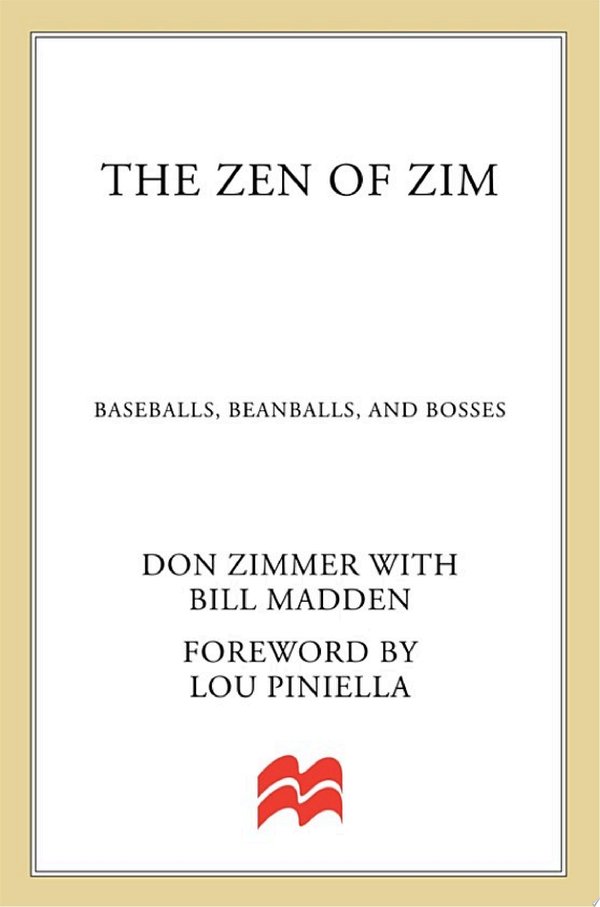
by Don Zimmer with Bill Madden · Sports Illustrated/Total Sports
One of baseball's most beloved figures—and New York Times –bestselling memoirist—offers readers an insightful look into the baseball of yesterday and today. Foreword by Lou Piniella With more than fifty-six years in baseball, Don Zimmer had seen it all, or so he thought before he ran into George Steinbrenner. In The Zen of Zim, Zimmer provides a revealing account of his eight years as Joe Torre's right-hand man—and the jealousy, vindictiveness, and pettiness that ultimately destroyed a twenty-five-year friendship with Steinbrenner. Zim will also discuss the circumstances that led to his charging onto the field at Fenway Park and throwing a haymaker at Boston Red Sox pitcher Pedro Martinez. He'll share with readers what it was like to work for other baseball owners; shed new light on general managers like Branch Rickey and Dan Duquette; and critique the managing styles of some of the most famous and notorious skippers of the twentieth century, from Casey Stengel and Earl Weaver to Gene Mauch and Billy Martin. In a chapter called "What Have They Done to My Game?" Zim will offer a crash course in baseball anthropology, describing how the game and its players have changed over the past fifty years and showing how big money and free agency have destroyed clubhouse camaraderie and turned a team sport into a transient game. In contrast, he celebrates his close-knit teammates on the 1955 Brooklyn Dodgers team and the lifelong friendships that were made. Zim has seen it all, and here readers learn even more of his life and dreams and of baseball through a half century of experience. It is a story jam-packed with laughs and anecdotes, with excitement and comedy. And it is superbly told.
Historical bestseller data sourced from the New York Times Book Review, archived by Hawes Publications.