1
—
JOHN ADAMS
David McCullough
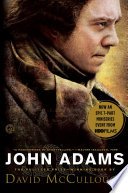
JOHN ADAMS
by David McCullough · Simon & Schuster
14 wks at #1 · 13 on list
Profiles John Adams, an influential patriot during the American Revolution who became the nation's first vice president and second president.
by David McCullough · Simon & Schuster
Profiles John Adams, an influential patriot during the American Revolution who became the nation's first vice president and second president.

by Stephen E. Ambrose · Simon & Schuster
Stephen E. Ambrose, acclaimed author of Band of Brothers and Undaunted Courage, carries us into the skies of World War II aviation, flying aboard the crowded and dangerous B-24 bombers as their crews fought to destroy the German war machine and secured Allied victory. The young men who flew the B-24s over Germany in World War II fought against horrific odds, and, in The Wild Blue, Ambrose recounts their extraordinary heroism, skill, daring, and comradeship with vivid detail and affection. Ambrose describes how the Army Air Forces recruited, trained, and selected the elite few who would undertake the most demanding and dangerous jobs in the war. These are the boys—turned pilots, bombardiers, navigators, and gunners of the B-24s—who suffered over fifty percent casualties. With his remarkable gift for bringing alive the action and tension of combat, Ambrose carries us along in the crowded, uncomfortable, and dangerous B-24s as their crews fought to the death through thick black smoke and deadly flak to reach their targets and destroy the German war machine. Twenty-two-year-old George McGovern, who was to become a United States senator and a presidential candidate, flew thirty-five combat missions (all the Army would allow) and won the Distinguished Flying Cross. We meet him and his mates, his co-pilot killed in action, and crews of other planes. Many went down in flames. As Band of Brothers and Citizen Soldiers portrayed the bravery and ultimate victory of the American soldiers from Normandy on to Germany, The Wild Blue illustrates the enormous contribution that these young men of the Army Air Forces made to the Allied victory.
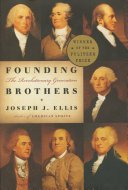
by Joseph J. Ellis · Knopf
An illuminating study of the intertwined lives of the founders of the American republic--John Adams, Aaron Burr, Benjamin Franklin, Alexander Hamilton, Thomas Jefferson, James Madison, and George Washington. During the 1790s, which Ellis calls the most decisive decade in our nation's history, the greatest statesmen of their generation--and perhaps any--came together to define the new republic and direct its course for the coming centuries. Ellis focuses on six discrete moments that exemplify the most crucial issues facing the fragile new nation: Burr and Hamilton's deadly duel, and what may have really happened; Hamilton, Jefferson, and Madison's secret dinner, during which the seat of the permanent capital was determined in exchange for passage of Hamilton's financial plan; Franklin's petition to end the "peculiar institution" of slavery--his last public act--and Madison's efforts to quash it; Washington's precedent-setting Farewell Address, announcing his retirement from public office and offering his country some final advice; Adams's difficult term as Washington's successor and his alleged scheme to pass the presidency on to his son; and finally, Adams and Jefferson's renewed correspondence at the end of their lives, in which they compared their different views of the Revolution and its legacy. In a lively and engaging narrative, Ellis recounts the sometimes collaborative, sometimes archly antagonistic interactions between these men, and shows us the private characters behind the public personas: Adams, the ever-combative iconoclast, whose closest political collaborator was his wife, Abigail; Burr, crafty, smooth, and one of the most despised public figures of his time; Hamilton, whose audacious manner and deep economic savvy masked his humble origins; Jefferson, renowned for his eloquence, but so reclusive and taciturn that he rarely spoke more than a few sentences in public; Madison, small, sickly, and paralyzingly shy, yet one of the most effective debaters of his generation; and the stiffly formal Washington, the ultimate realist, larger-than-life, and America's only truly indispensable figure. Ellis argues that the checks and balances that permitted the infant American republic to endure were not primarily legal, constitutional, or institutional, but intensely personal, rooted in the dynamic interaction of leaders with quite different visions and values. Revisiting the old-fashioned idea that character matters, Founding Brothers informs our understanding of American politics--then and now--and gives us a new perspective on the unpredictable forces that shape history.
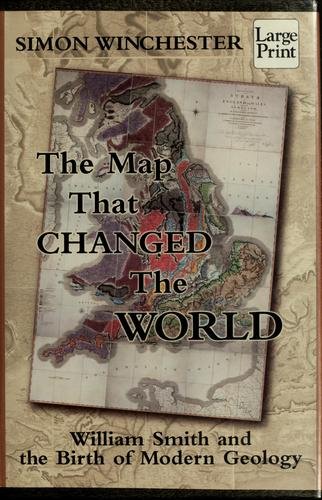
by Simon Winchester · HarperCollins
In 1793, a canal digger named William Smith made a startling discovery. He found that by tracing the placement of fossils, which he uncovered in his excavations, one could follow layers of rocks as they dipped and rose and fell--clear across England and, indeed, clear across the world--making it possible, for the first time ever, to draw a chart of the hidden underside of the earth. Smith spent twenty-two years piecing together the fragments of this unseen universe to create an epochal and remarkably beautiful hand-painted map. But instead of receiving accolades and honors, he ended up in debtors' prison, the victim of plagiarism, and virtually homeless for ten years more. The Map That Changed the World is a very human tale of endurance and achievement, of one man's dedication in the face of ruin. With a keen eye and thoughtful detail, Simon Winchester unfolds the poignant sacrifice behind this world-changing discovery.

by Christopher Andersen · Morrow
The best-selling author of The Day John Died and The Day Diana Died returns with a provocative, fascinating new biography that will shed dramatic new light on his subject's life and times. 250,000 first printing.

by Dominick Dunne · Crown
This is the story of the Trial of the Century as only Dominick Dunne can write it. Told from the point of view of one of Dunne's most familiar fictional characters-Gus Bailey-Another City, Not My Own tells how Gus, the movers and shakers of Los Angeles, and the city itself are drawn into the vortex of the O.J. Simpson trial. We have met Gus Bailey in previous novels by Dominick Dunne. He is a writer and journalist, father of a murdered child, and chronicler of justice-served or denied-as it relates to the rich and famous. Now back in Los Angeles, a city that once adored him and later shunned him, Gus is caught up in what soon becomes a national obsession. Using real names and places, Dunne interweaves the story of the trial with the personal trials Gus endures as he faces his own mortality. By day, Gus is at the courthouse, the confidant of the Goldman and Simpson families, the lawyers, the journalists, the hangers-on, even the judge; at night he is the honored guest at the most dazzling gatherings in town as everyone-from Kirk Douglas to Heidi Fleiss, from Elizabeth Taylor to Nancy Reagan-delights in the latest news from the corridors of the courthouse. Another City, Not My Own does what no other book on this sensational case has been able to do because of Dominick Dunne's unique ability to probe the sensibilities of participants and observers. This book illuminates the meaning of guilt and innocence in America today. A vivid, revealing achievement, Another City, Not My Own is Dominick Dunne at his best.

by Lance Armstrong with Sally Jenkins · Putnam
The #1 New York Times bestseller from the cancer survivor who became a four-time Tour de France champ. In 1996, young cycling phenom Armstrong discovered he had testicular cancer. In 1999, he won the Tour de France. Now he's a new father and a memoirist: with pluck, humility and verve, this volume covers his early life, his rise through the endurance sport world and his medical difficulties.

by Malika Oufkir and Michele Fitoussi · Talk Miramax/Hyperion
Twenty years in a desert jail.
by George Carlin · Hyperion
"The thinking person's comic offers a hilarious new collection of razor-sharp observations ..."--Page 4 of cover.
by Michael Lewis · Norton
An investigation of how new technology affects our lives. This book explores how digital technology and the Internet has changed the way we live. It argues that not only do we have the easiest access to more information than ever before, but that this has changed our attitudes to life.

by Michael Pollan · Random House
The book that helped make Michael Pollan, the New York Times bestselling author of Cooked and The Omnivore’s Dilemma, one of the most trusted food experts in America In 1637, one Dutchman paid as much for a single tulip bulb as the going price of a town house in Amsterdam. Three and a half centuries later, Amsterdam is once again the mecca for people who care passionately about one particular plant—though this time the obsessions revolves around the intoxicating effects of marijuana rather than the visual beauty of the tulip. How could flowers, of all things, become such objects of desire that they can drive men to financial ruin? In The Botany of Desire, Michael Pollan argues that the answer lies at the heart of the intimately reciprocal relationship between people and plants. In telling the stories of four familiar plant species that are deeply woven into the fabric of our lives, Pollan illustrates how they evolved to satisfy humankinds’s most basic yearnings—and by doing so made themselves indispensable. For, just as we’ve benefited from these plants, the plants, in the grand co-evolutionary scheme that Pollan evokes so brilliantly, have done well by us. The sweetness of apples, for example, induced the early Americans to spread the species, giving the tree a whole new continent in which to blossom. So who is really domesticating whom? Weaving fascinating anecdotes and accessible science into gorgeous prose, Pollan takes us on an absorbing journey that will change the way we think about our place in nature.
Historical bestseller data sourced from the New York Times Book Review, archived by Hawes Publications.