LEADERSHIP
by Rudolph W. Giuliani with Ken Kurson · Miramax/Hyperion
The former mayor of New York City describes the management, decision-making, and leadership skills that made him a success as a prosecutor and as mayor of New York City.
by Rudolph W. Giuliani with Ken Kurson · Miramax/Hyperion
The former mayor of New York City describes the management, decision-making, and leadership skills that made him a success as a prosecutor and as mayor of New York City.

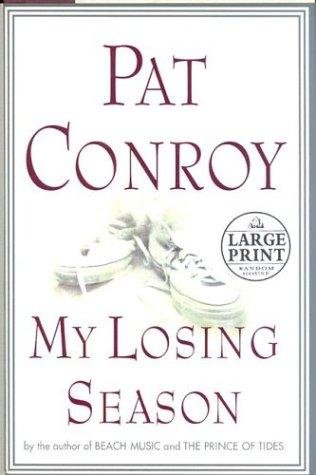
by Pat Conroy · Nan A. Talese/Doubleday
Dedicated to teammates on the 1966-67 Citadel basketball team.
by Tom Shales and James Andrew Miller · Little, Brown
WHEN A YOUNG WRITER named Lorne Michaels talked NBC executives into taking a chance on a new weekend late-night comedy series, nobody really knew what to expect-not even Michaels. But Saturday Night Live, launched in 1975 and still thriving today, would change the face of television. It introduced brash new stars with names like Belushi, Radner, Chase, and Murray; trashed taboos that had inhibited TV for decades; and had such an impact on American life, laughter, and politics that even presidents of the United States had to take notice. Now, Pulitzer Prize-winner Tom Shales and bestselling author James Andrew Miller bring together stars, writers, guest hosts, contributors, and craftsmen for the first-ever oral history of Saturday Night Live, from 1974, when it was just an idea, through 2002, when it has long since become an institution. In their own words, dozens of personalities recall the backstage stories, behind-the-scenes gossip, feuds, foibles, drugs, sex, struggles, and calamities, including personal details never before revealed. Shales and Miller have interviewed a galaxy of stars, including Mike Myers, Chris Rock, Bill Murray, Tom Hanks, Adam Sandler, Chevy Chase, Will Ferrell, Dan Aykroyd, Steve Martin, Jon Lovitz, Jane Curtin, Billy Crystal, Martin Short, Dana Carvey, Tina Fey, Jimmy Fallon, Chris Kattan, Julia Louis-Dreyfus, Garrett Morris, Molly Shannon, Damon Wayans, Chris Elliott, Julia Sweeney, Norm Macdonald, and Paul Simon-plus writers like Al Franken, Conan O'Brien, Larry David, Rosie Shuster, Jack Handey, Robert Smigel, Don Novello, and others who got their big breaks as part of the SNL team. The Coneheads, the Blues Brothers, Buck-wheat, Wayne and Garth, Hans and Franz, the Cheerleaders, Todd DiLaMuca and Lisa Loopner, "Cheeseburger cheeseburger," Mango, the Church Lady, Ed Grimley-they're all here. And for every fabulous character on-screen there was an outrageous maverick, misfit, or rebel behind the scenes. Live from New York does what no other book about the show has ever done: It lets the people who were there tell the story in their own words, blunt and loving and uncensored.

by Lisa Beamer with Ken Abraham · Tyndale
Shares details of the author's marriage and recounts her struggle to cope with the tragedy that cost her the life of her husband.

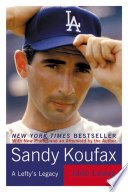
by Jane Leavy · HarperCollins
“Leavy has hit it out of the park…A lot more than a biography. It’s a consideration of how we create our heroes, and how this hero’s self perception distinguishes him from nearly every other great athlete in living memory… a remarkably rich portrait.” — Time The New York Times bestseller about the baseball legend and famously reclusive Dodgers’ pitcher Sandy Koufax, from award-winning former Washington Post sportswriter Jane Leavy. Sandy Koufax reveals, for the first time, what drove the three-time Cy Young award winner to the pinnacle of baseball and then—just as quickly—into self-imposed exile.

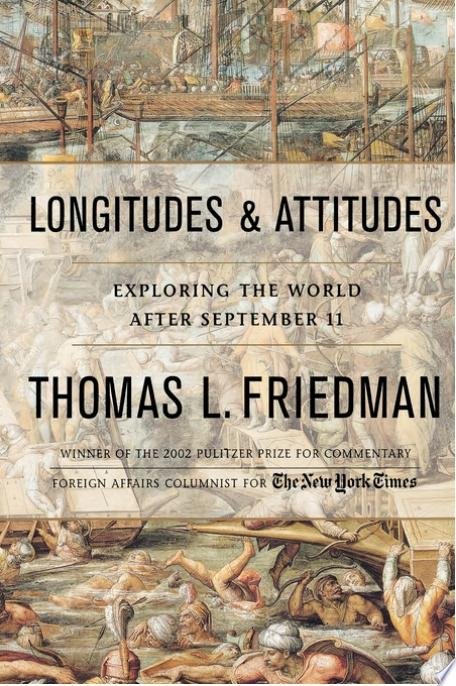
by Thomas L. Friedman · Farrar, Straus & Giroux
America's leading observer of the international scene on the minute-by-minute events of September 11, 2001--before, during and after . As the Foreign Affairs columnist for the The New York Times, Thomas L. Friedman is in a unique position to interpret the world for American readers. Twice a week, Friedman's celebrated commentary provides the most trenchant, pithy,and illuminating perspective in journalism. Longitudes and Attitudes contains the columns Friedman has published about the most momentous news story of our time, as well as a diary of his experiences and reactions during this period of crisis. As the author writes, the book is "not meant to be a comprehensive study of September 11 and all the factors that went into it. Rather, my hope is that it will constitute a 'word album' that captures and preserves the raw, unpolished, emotional and analytical responses that illustrate how I, and others, felt as we tried to grapple with September and its aftermath, as they were unfolding." Readers have repeatedly said that Friedman has expressed the essence of their own feelings, helping them not only by explaining who "they" are, but also by reassuring us about who "we" are. More than any other journalist writing, Friedman gives voice to America's awakening sense of its role in a changed world.

by Bruce Feiler · Morrow
In his new book, Bruce Feiler, the acclaimed author of Walking the Bible, travels to the Middle East to find the truth and the meaning behind the shadowy biblical figure of Abraham. He also explores how the three religions of Judaism, Christianity and Islam have appropriated Abraham as part of their tradition - and how the old man of the Bible could once again become a unifying force for those bitterly divided faiths. - Who was Abraham? - Why is he of fundamental importance to Jews, Christians and Muslims? - Can the message of his story help reconcile the warring faiths?

by Steven Pinker · Viking Press
Banishes the fears that a biological understanding of human nature threatens humane values.

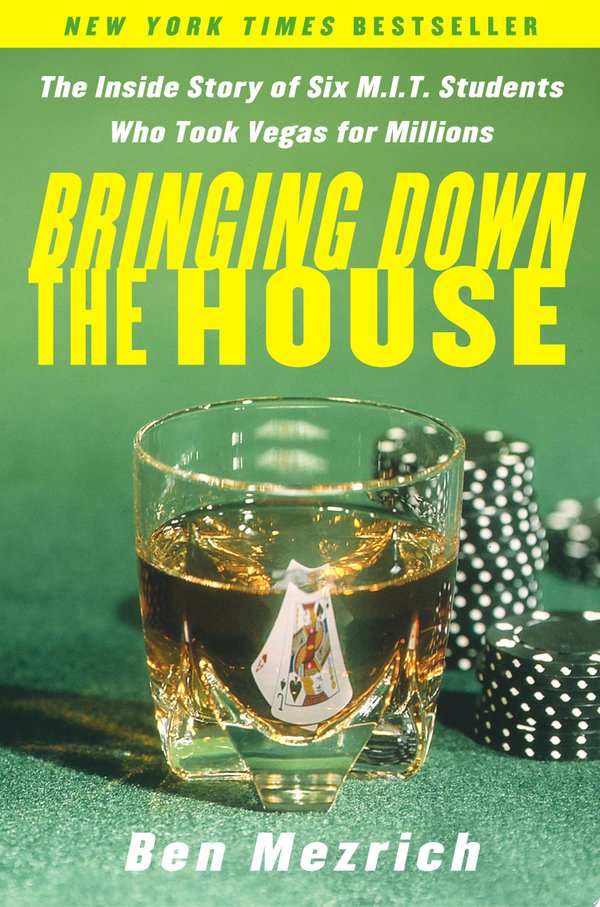
by Ben Mezrich · Free Press
Recounts the story of how a notorious gang of MIT blackjack savants devised and received backing for a system for winning at the world's most sophisticated casinos, an endeavor that earned them more than three million dollars.

by Arthur Levitt with Paula Dwyer · Pantheon
The ultimate insider reveals the culture of collusion and how it affects the individual investor. With integrity and authority, Levitt gives essential advice on how not to lose money.

by William Langewiesche · North Point Press
An unrestricted look at Manhattan's Ground Zero during the post-9/11 cleanup and those involved in the recovery efforts. Selected as one of the best books of 2002 by The New York Times, San Francisco Chronicle, Boston Globe, Los Angeles Times, and Chicago Sun-Times Within days after September 11, 2001, William Langewiesche had secured unique, unrestricted, around-the-clock access to the World Trade Center site. American Ground is a tour of this intense, ephemeral world and those who improvised the recovery effort day by day, and in the process reinvented themselves, discovering unknown strengths and weaknesses. In all of its aspects—emotionalism, impulsiveness, opportunism, territoriality, resourcefulness, and fundamental, cacophonous democracy—Langewiesche reveals the unbuilding to be uniquely American and oddly inspiring, an exercise in resilience and ingenuity in the face of disaster. "A genuinely monumental story, told without melodrama, an intimate depiction of ordinary Americans reacting to grand-scale tragedy at their best-and sometimes their worst." — Publishers Weekly "One of the gifts of American Ground [is] truth, unclouded by sentiment. This book's other gift is its capacity to surprise: it is a work of original reporting, and its pages are filled with astonishing observations." — The New York Times Book Review "One of the most compelling, dramatic, and uplifting pieces of writing you are likely ever to read. . . . American Ground will make you proud of the ground you walk on." — St. Louis Post-Dispatch

by Catherine Crier · Broadway
THE EMMY AWARD-WINNING HOST OF COURT TV’S "CATHERINE CRIER LIVE" DESCRIBES AN AMERICAN LEGAL SYSTEM DANGEROUSLY OUT OF CONTROL – AND FINDS THE LAWYERS GUILTY AS CHARGED. As a child, Catherine Crier was enchanted by film portrayals of crusading lawyers like Clarence Darrow and Atticus Finch. As a district attorney, private lawyer, and judge herself, she saw firsthand how the U.S. justice system worked – and didn’t. One of the most respected legal journalists and commentators today, she now confronts a profoundly unfair legal system that produces results and profits for the few – and paralysis, frustration, and injustice for the many. Alexis de Tocqueville’s dire prediction in Democracy in America has come true: We Americans have ceded our responsibility as citizens to resolve the problems of society to "legal authorities" – and with it our democratic freedoms. The Case Against Lawyers is both an angry indictment and an eloquent plea for a return to common sense. It decries a system of laws so complex even the enforcers – such as the IRS – cannot understand them. It unmasks a litigation-crazed society where billion-dollar judgments mostly line the pockets of personal injury lawyers. It deplores the stupidity of a system of liability that leads to such results as a label on a stroller that warns, “Remove child before folding.” It indicts a criminal justice system that puts minor drug offenders away for life yet allows celebrity murderers to walk free. And it excoriates the sheer corruption of the iron triangle of lawyers, bureaucrats, and politicians who profit mightily from all this inefficiency, injustice, and abuse. The Case Against Lawyers will make readers hopping mad. And it will make them realize that the only response can be to demand change. Now.
Historical bestseller data sourced from the New York Times Book Review, archived by Hawes Publications.