1
↑1
BLINK
Malcolm Gladwell
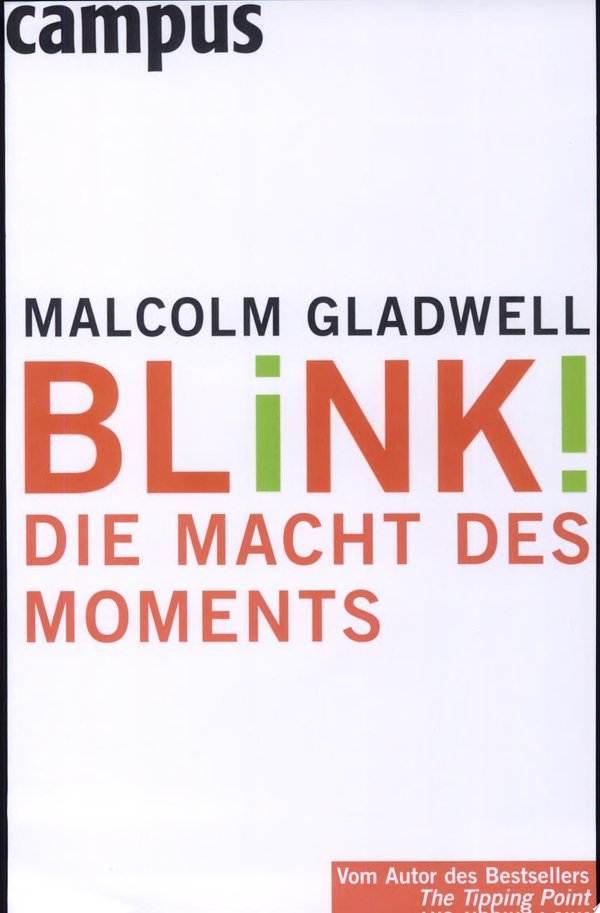
BLINK
by Malcolm Gladwell · Little, Brown
7 wks at #1 · 7 on list
Kennen Sie die kurzen Momente, in denen wir blitzartige Entscheidungen treffen - Momente, in denen wir denken, ohne zu denken?
by Malcolm Gladwell · Little, Brown
Kennen Sie die kurzen Momente, in denen wir blitzartige Entscheidungen treffen - Momente, in denen wir denken, ohne zu denken?
by Jose Canseco · ReganBooks/HarperCollins
When Jose Canseco burst into the Major Leagues in the 1980s, he changed the sport -- in more ways than one. No player before him possessed his mixture of speed and power, which allowed him to become the first man in history to belt more than forty home runs and swipe more than forty bases in the same season. He won Rookie of the Year, Most Valuable Player, and a World Series ring. Canseco shattered the mold of the out-of-shape baseball player and ushered in a new era of superathletes who looked like bodybuilders, made outrageous salaries, and enjoyed rock-star lifestyles. And the ticket for this ride? Steroids. Behind the gaudy stats and the glamour of his public life, Canseco cultivated a secret just about everyone in MLB knew about, one that would alter the game of baseball and the way we view our heroes forever. Canseco made himself a guinea pig of the performance-enhancing drugs that were only just beginning to infiltrate the American underground. Anabolic steroids, human growth hormones -- Canseco mixed, matched, and experimented to such a degree that he became known throughout the league as "The Chemist." He passed his knowledge on to trainers and fellow players, and before long, performance-enhancing drugs were running rampant throughout Major League Baseball. Sluggers scooping up pitches at their ankles and blasting them out of the park, pitchers cranking fastballs inning after inning -- Canseco showed the players how to customize their doses to sculpt the bodies they wanted, and baseball as we know it was the result. Today, this issue has crept out of the closet and burst into the headlines as players balloon to herculean proportions and hundred-year-old records are not only broken, but also demolished. In this shocking memoir, Canseco sheds light on a life of dizzying highs and debilitating lows, provides the answers to questions about steroids that millions of fans are only now beginning to ask -- and suggests that, far from being a passing trend, the steroid revolution is only a taste of things to come. Who's juiced? According to Canseco's authoritative account, more than you think. And baseball will never be the same.
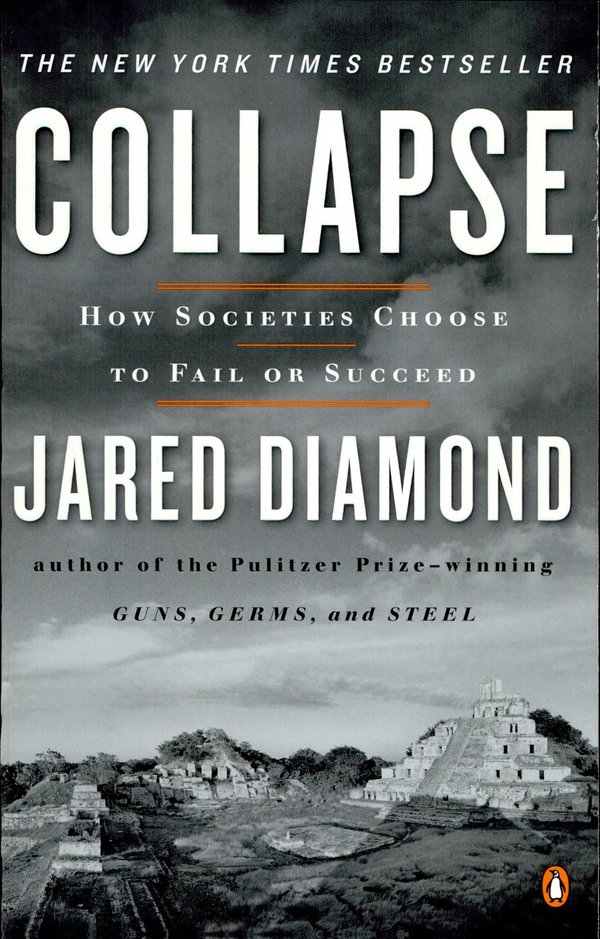
by Jared Diamond · Viking Press
This title has been removed from sale by Penguin Group, USA.
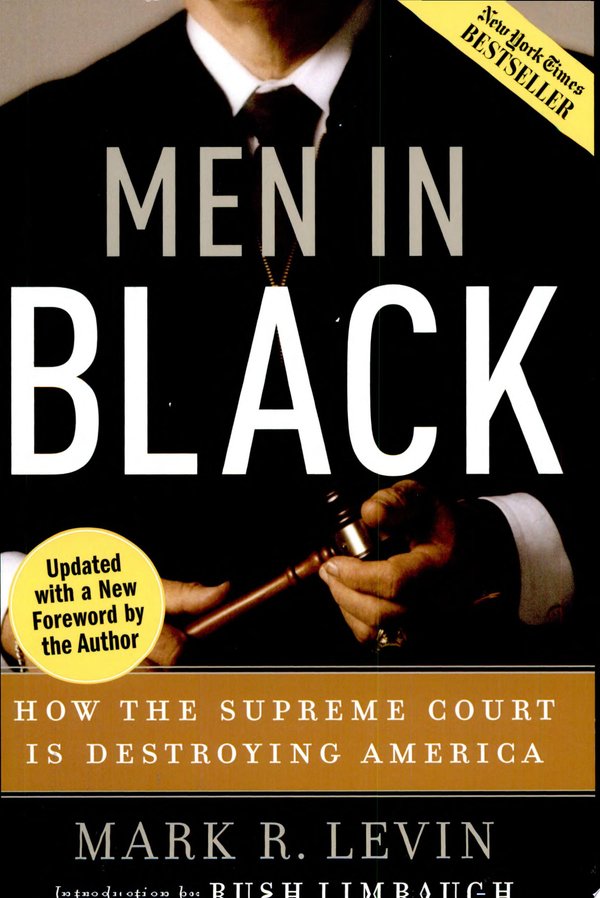
by Mark R. Levin · Regnery
Conservative talk radio host, lawyer, and frequent National Review contributor Mark R. Levin comes out firing against the United States Supreme Court in Men in Black, accusing the institution of corrupting the ideals of America's founding fathers. The court, in Levin's estimation, pursues an ideology-based activist agenda that oversteps its authority within the government. Levin examines several decisions in the court's history to illustrate his point, beginning with the landmark Marbury v. Madison case, wherein the court granted itself the power to declare acts of the other branches of government unconstitutional. He devotes later chapters to other key cases culminating in modern issues such as same-sex marriage and the McCain-Feingold campaign finance reform bill. Like effective attorneys do, Levin packs in copious research material and delivers his points with tremendous vigor, excoriating the justices for instances where he feels strict constit utional constructivism gave way to biased interpretation. But Levin's definition of "activism" seems inconsistent. In the case of McCain-Feingold, the court declined to rule on a bill already passed by congress and signed by the president, but Levin, who thinks the bill violates the First Amendment, still accuses them of activism even when they were actually passive. To his talk-radio listeners, Levin's hard-charging style and dire warnings of the court's direction will strike a resonant tone of alarm, though the hyperbole may be a bit off-putting to the uninitiated. As an attack on the vagaries of decisions rendered by the Supreme Court and on some current justices, Men in Black scores points and will likely lead sympathetic juries to conviction. -
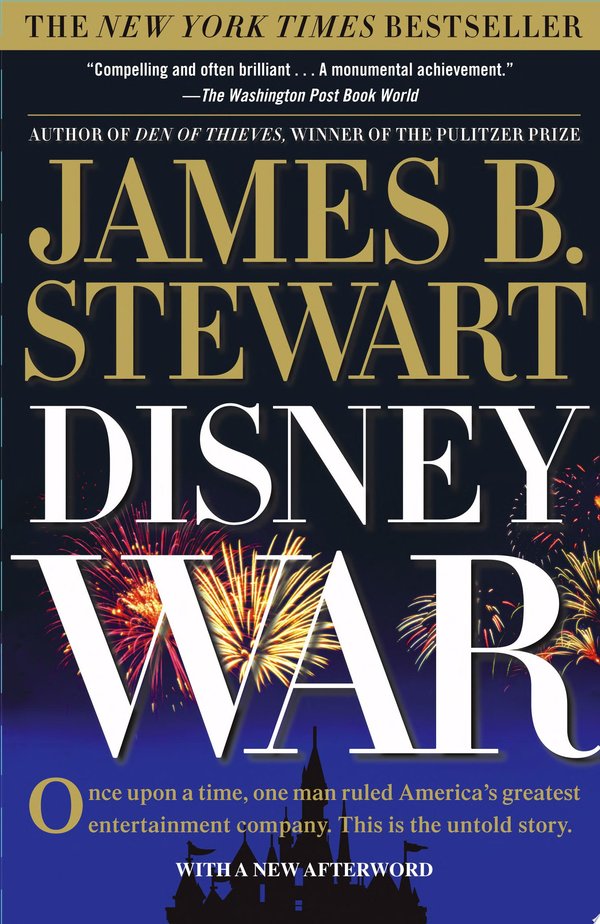
by James B. Stewart · Simon & Schuster
The dramatic inside story of the downfall of Michael Eisner—Disney Chairman and CEO—and the scandals that drove America’s best-known entertainment company to civil war. “When You Wish Upon a Star,” “Whistle While You Work,” “The Happiest Place on Earth”—these are lyrics indelibly linked to Disney, one of the most admired and best-known companies in the world. So when Roy Disney, chairman of Walt Disney Animation and nephew of founder Walt Disney, abruptly resigned in November 2003 and declared war on chairman and chief executive Michael Eisner, he sent shock waves through the entertainment industry, corporate boardrooms, theme parks, and living rooms around the world—everywhere Disney does business and its products are cherished. Drawing on unprecedented access to both Eisner and Roy Disney, current and former Disney executives and board members, as well as thousands of pages of never-before-seen letters, memos, transcripts, and other documents, James B. Stewart gets to the bottom of mysteries that have enveloped Disney for years: What really caused the rupture with studio chairman Jeffrey Katzenberg, a man who once regarded Eisner as a father but who became his fiercest rival? How could Eisner have so misjudged Michael Ovitz, a man who was not only “the most powerful man in Hollywood” but also his friend, whom he appointed as Disney president and immediately wanted to fire? What caused the break between Eisner and Pixar chairman Steve Jobs, and why did Pixar abruptly abandon its partnership with Disney? Why did Eisner so mistrust Roy Disney that he assigned Disney company executives to spy on him? How did Eisner control the Disney board for so long, and what really happened in the fateful board meeting in September 2004, when Eisner played his last cards? DisneyWar is an enthralling tale of one of America’s most powerful media and entertainment companies, the people who control it, and those trying to overthrow them. It tells a story that—in its sudden twists, vivid, larger-than-life characters, and thrilling climax—might itself have been the subject of a Disney classic—except that it’s all true.

by Sylvia Browne · Hay House
'In this book, you'll read about some of the secrets and mysteries that have greatly puzzled humankind, in some cases for centuries...... I've personally visited most of the places where the mysteries in this book originate. I've walked the paths and used myself as a psychic barometer first, and then I've gone back to see if I could prove what I telepathically picked up using research, statistics, eyewitness accounts, and sometimes just good o'l common sense.' - Sylvia Browne Topics covered in the book include- Stonehenge Easter Island Atlantis Vampires Extraterrestrials Crystal Skulls Crop Circles Voodoo Stigmata The Shroud of Turin And much, much more!
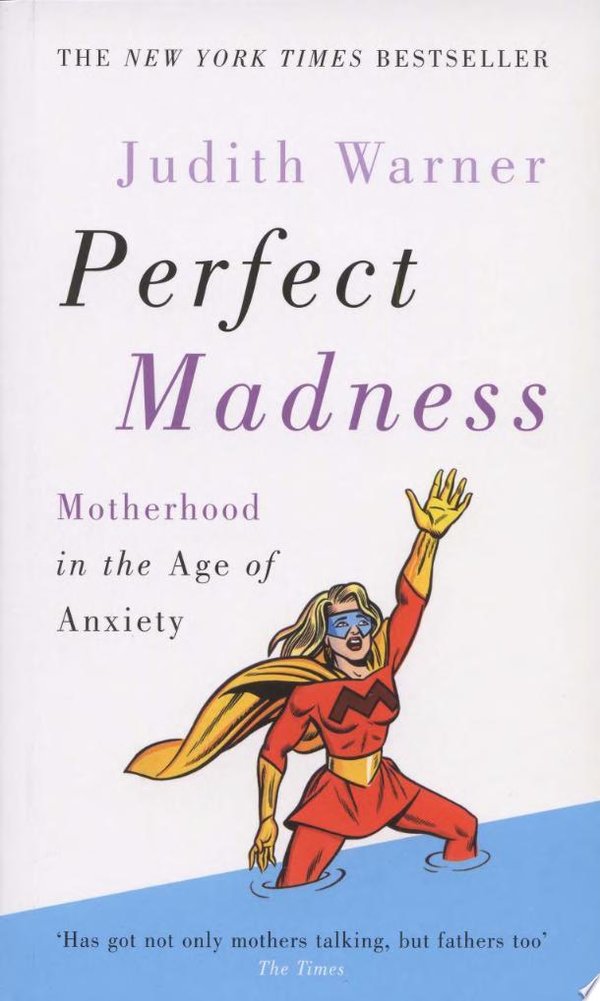
by Judith Warner · Riverhead
Manic cake-baking at midnight. After-school activities and young social lives that require dedicated and complex organisation. Mother-of-the-birthday-boy meltdowns. No Sex. No Nights out. No Sleep. Ever. What's wrong with this picture? That's the question Judith Warner asked herself after taking a good, hard look at the world of modern motherhood, at anxious women at work and in bed with unhappy husbands. By moving personally between the worlds of stay-at-home and working motherhood, interviewing numerous women and reading and seeing what our popular culture and politicians had to offer on the subject of motherhood in our time, Warner comes to a stark conclusion: that what is now happening in the culture of motherhood is nothing less that perfect madness. Written in a lively, accessible and often amusing tone, this is a book that all mothers will be able to relate to.
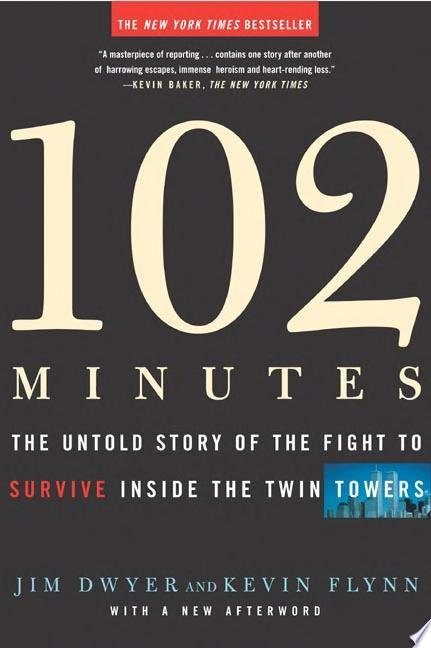
by Jim Dwyer and Kevin Flynn · Times Books/Holt
"102 Minutes does for the September 11 catastrophe what Walter Lord did for the Titanic in his masterpiece, A Night to Remember . . . Searing, poignant, and utterly compelling."—Rick Atkinson, Pulitzer Prize-winning author of An Army at Dawn Hailed upon publication as an instant classic, the critically acclaimed New York Times bestseller and National Book Award Finalist for Nonfiction is now available in a revised edition to honor the anniversary of the attacks of September 11, 2001. At 8:46 a.m. that morning, fourteen thouosand people were inside the World Trade Center just starting their workdays, but over the next 102 minutes, each would become part of a drama for the ages. Of the millions of words written about this wrenching day, most were told from the outside looking in. New York Times reporters Jim Dwyer and Kevin Flynn draw on hundreds of interviews with rescuers and survivors, thousands of pages of oral histories, and countless phone, e-mail, and emergency radio transcripts to tell the story of September 11 from the inside looking out. Dwyer and Flynn have woven an epic and unforgettable account of the struggle, determination, and grace of the ordinary men and women who made 102 minutes count as never before. 102 Minutes is a 2005 National Book Award Finalist for Nonfiction.
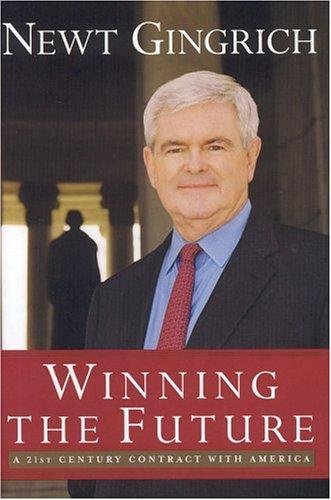
by Newt Gingrich · Regnery
According to former House Speaker Newt Gingrich, America currently faces five threats that could undermine, if not eliminate, the United States if immediate steps are not taken to correct them. The threats as he sees them are Islamic terrorists and rogue dictatorships armed with nuclear or biological weapons; the removal of God from American public life; a loss of patriotism and sense of America's history; a decline in economic supremacy because of poor science and math education; and the increasing budgetary burden of Social Security and Medicare. To tackle these problems, Gingrich offers his "21st Century Contract with America," which he outlines in great detail in this bold and thought-provoking book. His updated contract, which comes a decade after the original Republican Contract with America that marked the high point of Gingrich's national power, calls for a dramatically simplified tax code that favors savings and investment; government investment in science and technology, particularly regarding space, energy, and the environment; transforming Social Security into personal savings accounts; overhauling the civil justice system to reduce the burden of lawsuits; and updating the federal government, including the privatization of some functions, so that it moves at the speed and effectiveness of the information age. And that's just the beginning. He also calls for tripling the size of America's intelligence community, reforming its election system, developing a more intelligent health care system that creates jobs and increases quality of life, and balancing the federal budget. Gingrich believes that this ambitious agenda can be accomplished, but only if it receives grassroots support. The entrenched political system, with its lobbyists, bloated bureaucracies, and the complicity of the media, is too self-serving to fix itself, he stresses. Concise and clearly presented, Winning the Future is long on specifics and short on rhetoric, and it succeeds as a springboard for political discourse. Gingrich's aim is clearly to inspire citizens to take responsibility for the county's direction by demanding more of their government and their leaders.

by Tori Amos and Ann Powers · Broadway
An intimate, eye-opening look inside the life of one of the most unique and adored performers of contemporary rock music From her critically acclaimed 1992 debut, Little Earthquakes, to the recent hit, Scarlet’s Walk, Tori Amos has been a formidable force in contemporary music, with one of the most dedicated fan bases in the industry. In Tori Amos: Piece by Piece, the singer herself takes readers beyond the mere facts, explaining the specifics of her creative process—how her songs go from ideas and melodies to recordings and passionately performed concert pieces. Written with acclaimed music journalist Ann Powers, Tori Amos: Piece by Piece is a firsthand account of the most intricate and intimate details of Amos’s life as both a private individual and a very public performing musician. In passionate and informative prose, Amos explains how her songs come to her and how she records and then performs them for audiences everywhere, all the while connecting with listeners across the world and maintaining her own family life (which includes raising a young daughter). But it is also much more, a verbal collage made by two strong female voices – and the voices of those closest to Amos—that calls upon genealogy, myth, and folklore to express Amos’s unique and fascinating personal history. In short, we see the pieces that make up – as Amos herself puts it—“the woman we call Tori.” With photos taken especially for this book by the photographer Loren Haynes, Tori Amos: Piece by Piece is a rare treat for both Tori listeners and newcomers alike, a look into the heart and mind of an extraordinary musician.

by Koren Zailckas · Viking Press
From earliest experimentation to habitual excess to full-blown abuse, twenty-four-year-old Koren Zailckas leads us through her experience of a terrifying trend among young girls, exploring how binge drinking becomes routine, how it becomes "the usual." With the stylistic freshness of a poet and the dramatic gifts of a novelist, Zailckas describes her first sip at fourteen, alcohol poisoning at sixteen, a blacked-out sexual experience at nineteen, total disorientation after waking up in an unfamiliar New York City apartment at twenty-two, when she realized she had to stop, and all the depression, rage, troubled friendships, and sputtering romantic connections in between.
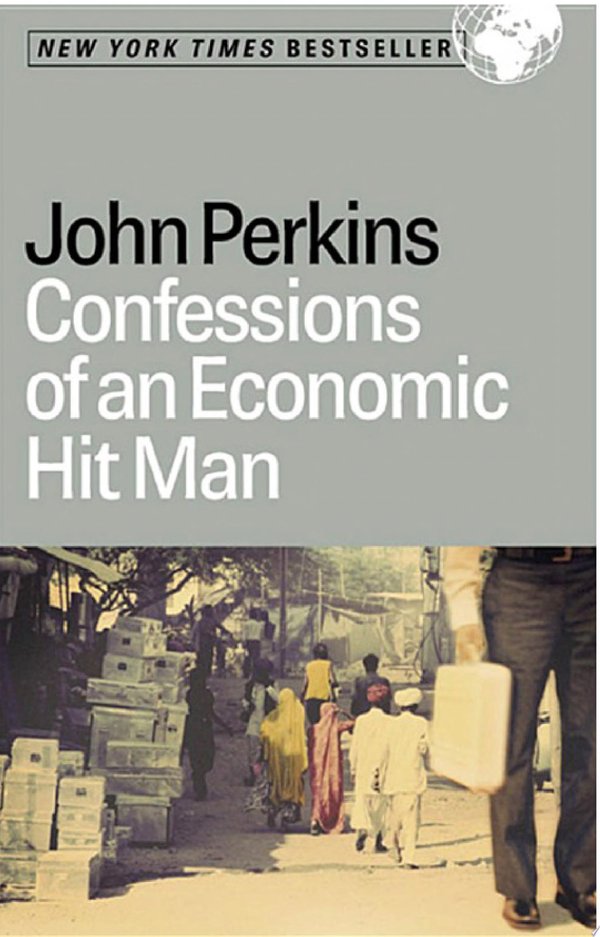
by John Perkins · Berrett-Koehler
"Economic hit men,” John Perkins writes, “are highly paid professionals who cheat countries around the globe out of trillions of dollars. Their tools include fraudulent financial reports, rigged elections, payoffs, extortion, sex, and murder.” John Perkins should know—he was an economic hit man. His job was to convince countries that are strategically important to the U.S.—from Indonesia to Panama—to accept enormous loans for infrastructure development, and to make sure that the lucrative projects were contracted to U. S. corporations. Saddled with huge debts, these countries came under the control of the United States government, World Bank and other U.S.-dominated aid agencies that acted like loan sharks—dictating repayment terms and bullying foreign governments into submission. This New York Times bestseller exposes international intrigue, corruption, and little-known government and corporate activities that have dire consequences for American democracy and the world. It is a compelling story that also offers hope and a vision for realizing the American dream of a just and compassionate world that will bring us greater security.
by Natan Sharansky with Ron Dermer · PublicAffairs
Natan Sharansky believes that the truest expression of democracy is the ability to stand in the middle of a town square and express one's views without fear of imprisonment. He should know. A dissident in the USSR, Sharansky was jailed for nine years for challenging Soviet policies. During that time he reinforced his moral conviction that democracy is essential to both protecting human rights and maintaining global peace and security. Sharansky was catapulted onto the Israeli political stage in 1996. In the last eight years, he has served as a minister in four different Israeli cabinets, including a stint as Deputy Prime Minister, playing a key role in government decision making from the peace negotiations at Wye to the war against Palestinian terror. In his views, he has been as consistent as he has been stubborn: Tyranny, whether in the Soviet Union or the Middle East, must always be made to bow before democracy. Drawing on a lifetime of experience of democracy and its absence, Sharansky believes that only democracy can safeguard the well-being of societies. For Sharansky, when it comes to democracy, politics is not a matter of left and right, but right and wrong. This is a passionately argued book from a man who carries supreme moral authority to make the case he does here: that the spread of democracy everywhere is not only possible, but also essential to the survival of our civilization. His argument is sure to stir controversy on all sides; this is arguably the great issue of our times.
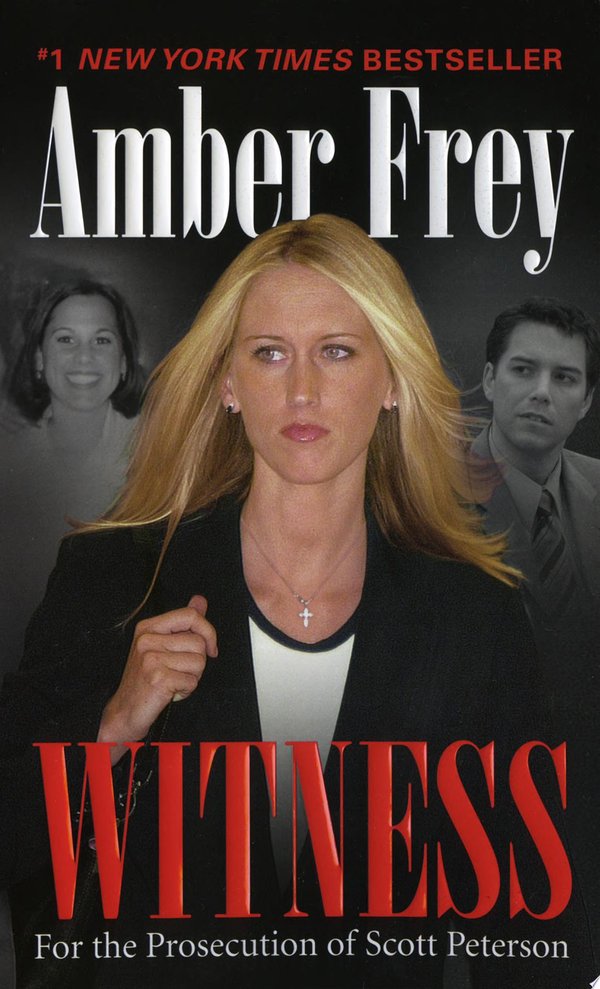
by Amber Frey · ReganBooks/HarperCollins
1 corinthians 10:13, niv "No temptation has seized you except what is common to man. And God is faithful; He will not let you be tempted beyond what you can bear. But when you are tempted, He will also provide a way out so that you can stand up under it." Amber Frey's life was full of blessings: an exciting new business, a beautiful home, and most of all, her infant daughter, Ayiana. But Amber had been through some unhappy relationships, and she longed for a true and loving partner. In November 2002, she went on a blind date with Scott Peterson. He was handsome, charming, thoughtful, and romantic. Best of all, he was single and ready to settle down . . . or so he said. Their connection was immediate. Over the next few weeks, Amber and Scott grew closer and closer. Scott won her over with his warmth, humor, and intelligence, and he even won the heart of little Ayiana. Before long, he began to speak of the beautiful future the three of them were destined to share as a family. Soon enough, however, Amber began to suspect that Scott Peterson might not be the man he claimed to be. On December 9, he broke down in tears and told her that he had been married, but had "lost" his wife. This was weeks before Laci Peterson, eight months pregnant at the time, was even reported missing. Scott Peterson hadn't lost her, but clearly he was planning to. Suddenly a relationship that seemed full of promise was turning into Amber's worst nightmare. Amber launched an investigation of her own. The moment she was able to confirm her worst suspicions, she contacted the Modesto Police Department, in northern California, and offered to do whatever she could to help. She began secretly taping her conversations with Scott, pressing him for information but never letting on that she had heard the news of Laci's disappearance. Those conversations became the basis for the prosecution's case against Scott Peterson for the murder of his wife and unborn child. Amber's whole world was turned upside down in the process. She lost her privacy, as every detail of her life was scrutinized by the media, who couldn't seem to get enough of this tragic, heart-wrenching story. But she soldiered on, looking deep inside herself and drawing strength from her faith. Witness is the chilling story of how a young woman became ensnared in Scott Peterson's web of lies, then risked everything to seek justice for Laci Peterson and her unborn child, Conner. It is also a story of forgiveness and faith, and of one woman's struggle to live with an open and honest heart.
Historical bestseller data sourced from the New York Times Book Review, archived by Hawes Publications.