1
—
BLINK
Malcolm Gladwell
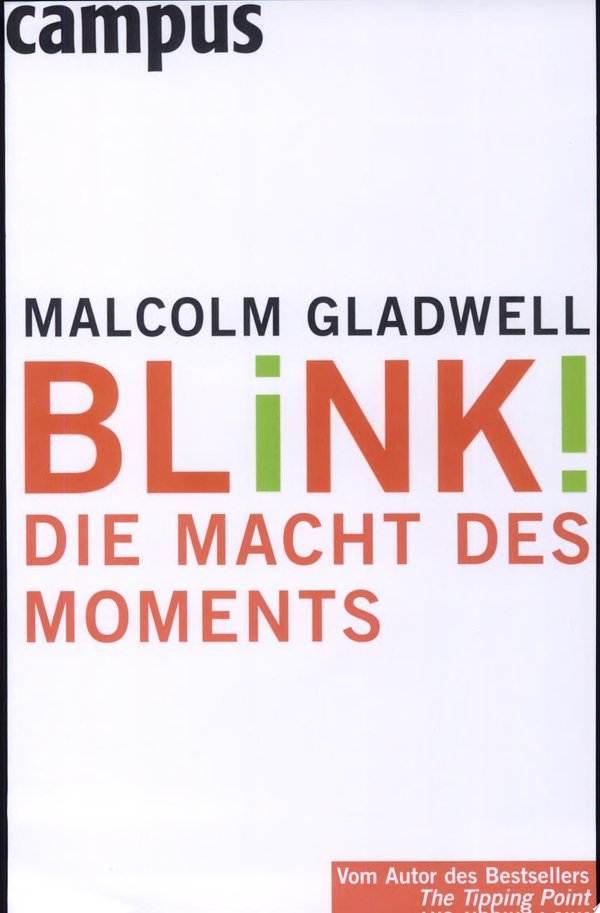
BLINK
by Malcolm Gladwell · Little, Brown
7 wks at #1 · 12 on list
Kennen Sie die kurzen Momente, in denen wir blitzartige Entscheidungen treffen - Momente, in denen wir denken, ohne zu denken?
by Malcolm Gladwell · Little, Brown
Kennen Sie die kurzen Momente, in denen wir blitzartige Entscheidungen treffen - Momente, in denen wir denken, ohne zu denken?
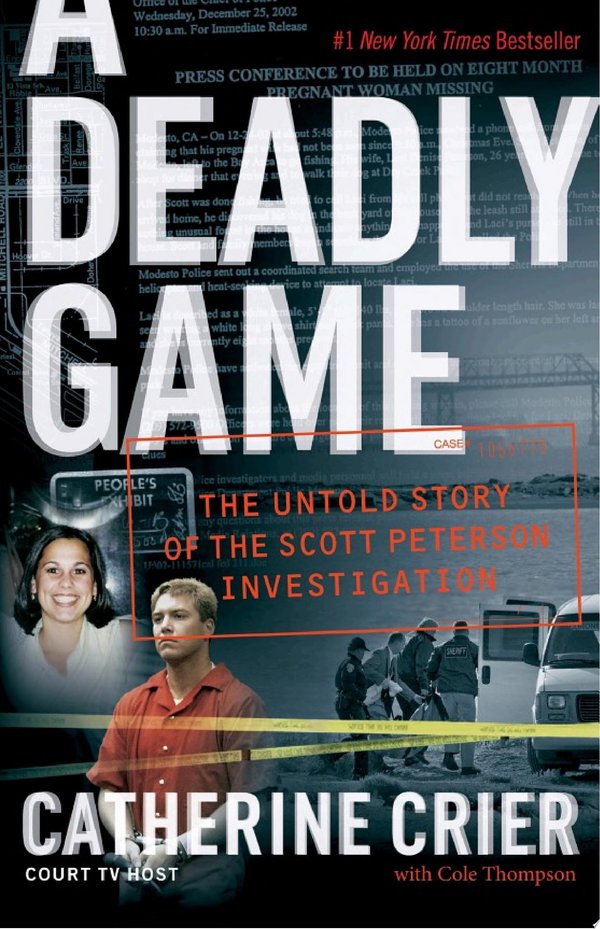
by Catherine Crier with Cole Thompson · ReganBooks/HarperCollins
A #1 New York Times –bestselling true crime account of the 2002 California murder of Laci Peterson and the investigation of her husband, Scott. "Anyone looking for a comprehensive overview of the case will find it here." — Publishers Weekly In A Deadly Game, Catherine Crier, a former judge and one of television's most popular legal analysts, offers a riveting and authoritative account of one of the most memorable crime dramas of our time: the murder of Laci Peterson at the hands of her husband, Scott, on Christmas Eve 2002. Drawing on extensive interviews with key witnesses and lead investigators, as well as secret evidence files that never made it to trial, Crier traces Scott's bizarre behavior; shares dozens of transcripts of Scott's chilling and incriminating phone conversations; offers accounts of Scott's womanizing from two former mistresses before Amber Frey; and includes scores of never-before-seen police photos, documents, and other evidence. The result is thoroughly engrossing yet highly disturbing—an unforgettable portrait of a charming, yet deeply sociopathic, killer. "Definitive. . . . [Crier's investigation] yielded information that never made it to the jury." — USA Today "A gripping—sometimes startling—look behind the scenes of the Peterson murder case, which only heightens its fascination." —Scott Turow, #1 New York Times– bestselling author of Ordinary Heroes and Reversible Errors
by Harry G. Frankfurt · Princeton University Press
Over one million copies sold worldwide The international and #1 New York Times bestseller The anniversary edition of the acclaimed book that reveals why bullshit is more dangerous than lying One of the most prominent features of our world is that there is so much bullshit. Yet we have no clear understanding of what bullshit is, how it’s different from lying, what purposes it serves, and what it means. In his acclaimed bestseller On Bullshit, which was featured on The Daily Show and 60 Minutes, Harry Frankfurt, who was one of the world’s most influential moral philosophers, explores one of the most serious problems of our politics and our world. This twentieth anniversary edition features a postscript in which Frankfurt emphasizes that “indifference to the truth is extremely dangerous.” With his characteristic combination of philosophical acuity, psychological insight, and wry humor, Frankfurt argues that bullshitters misrepresent themselves to their audience not as liars do—that is, by deliberately making false claims about what’s true. Rather, bullshitters seek to convey a certain impression of themselves without being concerned about whether anything at all is true. They quietly change the rules governing the conversation so that claims about truth and falsity are irrelevant. Although bullshit can take innocent forms, excessive indulgence in it can eventually undermine the bullshitter’s capacity to tell the truth in a way that lying doesn’t. Liars at least acknowledge that the truth matters. Because of this, Frankfurt says, “bullshit is a greater enemy of the truth than lies are.” Remarkably prescient and insightful, On Bullshit is a small book that explains a great deal about our time.
by Kurt Eichenwald · Broadway
From an award-winning New York Times reporter comes the full, mind-boggling true story of the lies, crimes, and ineptitude behind the Enron scandal that imperiled a presidency, destroyed a marketplace, and changed Washington and Wall Street forever. It was the corporate collapse that appeared to come out of nowhere. In late 2001, the Enron Corporation—a darling of the financial world, a company whose executives were friends of presidents and the powerful—imploded virtually overnight, leaving vast wreckage in its wake and sparking a criminal investigation that would last for years. Kurt Eichenwald transforms the unbelievable story of the Enron scandal into a rip-roaring narrative of epic proportions, taking readers behind every closed door—from the Oval Office to the executive suites, from the highest reaches of the Justice Department to the homes and bedrooms of the top officers. It is a tale of global reach—from Houston to Washington, from Bombay to London, from Munich to Sao Paolo—laying out the unbelievable scenes that twisted together to create this shocking true story. Eichenwald reveals never-disclosed details of a story that features a cast including George W. Bush, Dick Cheney, Paul O’Neill, Harvey Pitt, Colin Powell, Gray Davis, Arnold Schwarzenegger, Alan Greenspan, Ken Lay, Andy Fastow, Jeff Skilling, Bill Clinton, Rupert Murdoch and Sumner Redstone. With its you-are-there glimpse into the secretive worlds of corporate power, Conspiracy of Fools is an all-true financial and political thriller of cinematic proportions.
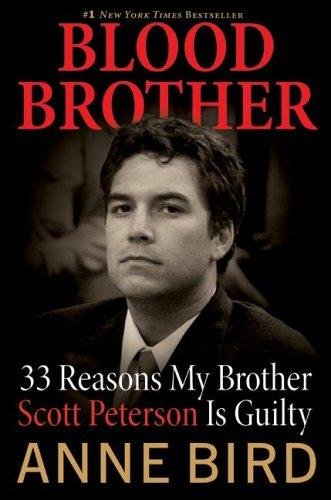
by Anne Bird · ReganBooks/HarperCollins
What happens if, after being given up for adoption in childhood, you reestablish contact with your biological family -- only to discover that your newfound brother is a killer? Anne Bird, the sister of Scott Peterson, knows firsthand. Soon after her birth in 1965, Anne was given up for adoption by her mother, Jackie Latham. Welcomed into the well-adjusted Grady family, she lived a happy life. Then, in the late 1990s, she came back into contact with her mother, now Jackie Peterson, and her family -- including Jackie's son Scott Peterson and his wife, Laci. Anne was welcomed into the family, and over the next several years she grew close to Scott and especially Laci. Together they shared holidays, family reunions, and even a trip to Disneyland. Anne and Laci became pregnant at roughly the same time, and the two became confidantes. Then, on Christmas Eve 2002, Laci Peterson went missing -- and the happy fac ade of the Peterson family slowly began to crumble. Anne rushed to the family's aid, helping in the search for Laci, even allowing Scott to stay in her home while police tried to find his wife. Yet Scott's behavior grew increasingly bizarre during the search, and Anne grew suspicious that her brother knew more than he was telling. Finally she began keeping a list of his disturbing behavior. And by the time Laci's body -- and that of her unborn son, Conner -- were found, Anne was becoming convinced: Her brother Scott Peterson had murdered his wife and unborn child in cold blood. Filled with news-making revelations and intimate glimpses of Scott and Laci, the Peterson family, and the investigation that followed the murder, Blood Brother is a provocative account of howlong-dormant family ties dragged one woman into one of the most notorious crimes of our time.
by Anne Lamott · Riverhead
From the New York Times bestselling author of Hallelujah Anyway, Bird by Bird, and Almost Everything, a spiritual antidote to anxiety and despair in increasingly fraught times. As Anne Lamott knows, the world is a dangerous place. Terrorism and war have become the new normal. Environmental devastation looms even closer. And there are personal demands on her faith as well: getting older; her mother's Alzheimer's; her son's adolescence; and the passing of friends and time. Fortunately for those of us who are anxious about the state of the world, whose parents are also aging and dying, whose children are growing harder to recognize as they become teenagers, Plan B offers hope that we’re not alone in the midst of despair. It shares with us Lamott's ability to comfort and to make us laugh despite the grim realities. Anne Lamott is one of our most beloved writers, and Plan B is a book more necessary now than ever. It is further evidence that, as The New Yorker has written, "Anne Lamott is a cause for celebration."
by Mark R. Levin · Regnery
Conservative talk radio host, lawyer, and frequent National Review contributor Mark R. Levin comes out firing against the United States Supreme Court in Men in Black, accusing the institution of corrupting the ideals of America's founding fathers. The court, in Levin's estimation, pursues an ideology-based activist agenda that oversteps its authority within the government. Levin examines several decisions in the court's history to illustrate his point, beginning with the landmark Marbury v. Madison case, wherein the court granted itself the power to declare acts of the other branches of government unconstitutional. He devotes later chapters to other key cases culminating in modern issues such as same-sex marriage and the McCain-Feingold campaign finance reform bill. Like effective attorneys do, Levin packs in copious research material and delivers his points with tremendous vigor, excoriating the justices for instances where he feels strict constit utional constructivism gave way to biased interpretation. But Levin's definition of "activism" seems inconsistent. In the case of McCain-Feingold, the court declined to rule on a bill already passed by congress and signed by the president, but Levin, who thinks the bill violates the First Amendment, still accuses them of activism even when they were actually passive. To his talk-radio listeners, Levin's hard-charging style and dire warnings of the court's direction will strike a resonant tone of alarm, though the hyperbole may be a bit off-putting to the uninitiated. As an attack on the vagaries of decisions rendered by the Supreme Court and on some current justices, Men in Black scores points and will likely lead sympathetic juries to conviction. -
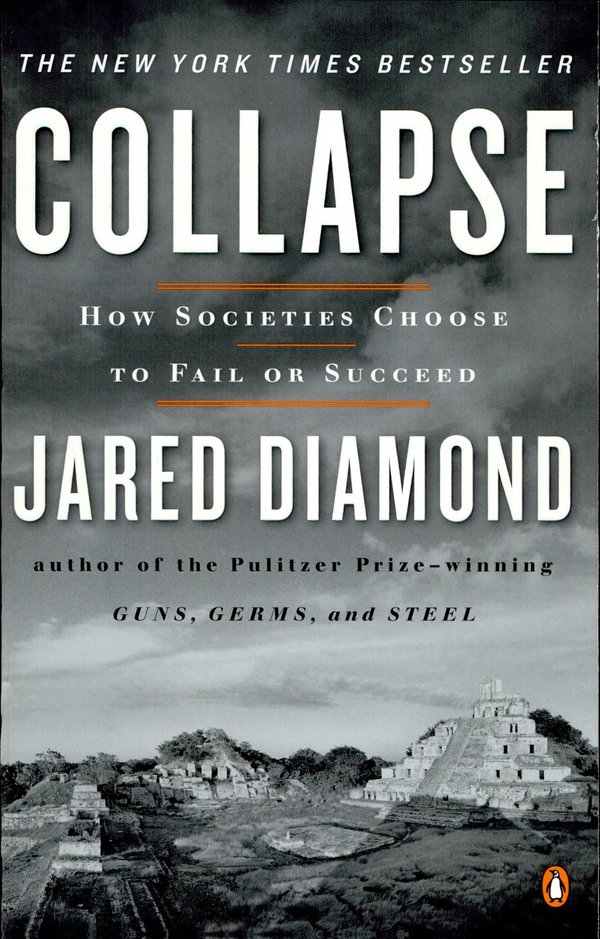
by Jared Diamond · Viking Press
This title has been removed from sale by Penguin Group, USA.
by Jose Canseco · ReganBooks/HarperCollins
When Jose Canseco burst into the Major Leagues in the 1980s, he changed the sport -- in more ways than one. No player before him possessed his mixture of speed and power, which allowed him to become the first man in history to belt more than forty home runs and swipe more than forty bases in the same season. He won Rookie of the Year, Most Valuable Player, and a World Series ring. Canseco shattered the mold of the out-of-shape baseball player and ushered in a new era of superathletes who looked like bodybuilders, made outrageous salaries, and enjoyed rock-star lifestyles. And the ticket for this ride? Steroids. Behind the gaudy stats and the glamour of his public life, Canseco cultivated a secret just about everyone in MLB knew about, one that would alter the game of baseball and the way we view our heroes forever. Canseco made himself a guinea pig of the performance-enhancing drugs that were only just beginning to infiltrate the American underground. Anabolic steroids, human growth hormones -- Canseco mixed, matched, and experimented to such a degree that he became known throughout the league as "The Chemist." He passed his knowledge on to trainers and fellow players, and before long, performance-enhancing drugs were running rampant throughout Major League Baseball. Sluggers scooping up pitches at their ankles and blasting them out of the park, pitchers cranking fastballs inning after inning -- Canseco showed the players how to customize their doses to sculpt the bodies they wanted, and baseball as we know it was the result. Today, this issue has crept out of the closet and burst into the headlines as players balloon to herculean proportions and hundred-year-old records are not only broken, but also demolished. In this shocking memoir, Canseco sheds light on a life of dizzying highs and debilitating lows, provides the answers to questions about steroids that millions of fans are only now beginning to ask -- and suggests that, far from being a passing trend, the steroid revolution is only a taste of things to come. Who's juiced? According to Canseco's authoritative account, more than you think. And baseball will never be the same.
by Buzz Bissinger · Houghton Mifflin
The Pulitzer Prize-winning author of Friday Nights Lights chronicles a three-game series between baseball rivals Cardinals and Cubs, focusing particular attention on the stars of the game, Albert Pujols, Sammy Sosa, Mark Prior, and Scott Rolen. Reprint.
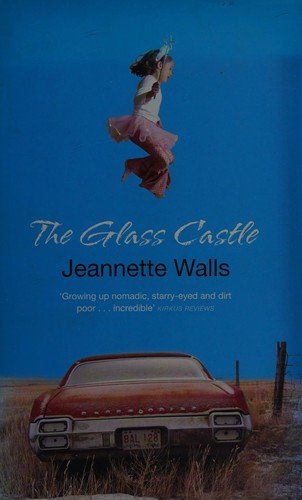
by Jeannette Walls · Scribner
Jeannette Walls tells the story about her childhood. She talks about living like nomads, moving among Southwest desert towns, camping in the mountains. Retreating to the dismal West Virginia mining town--and the family-- her father, Rex Walls, had done everything he could to escape. He drank. He stole the grocery money and disappeared for days. As the dysfunction of the family escalated, Jeannette and her brother and sisters had to fend for themselves, supporting one another as they weathered their parents' betrayals and, finally, found the resources and will to leave home. Also available in accessible formats via CELA.
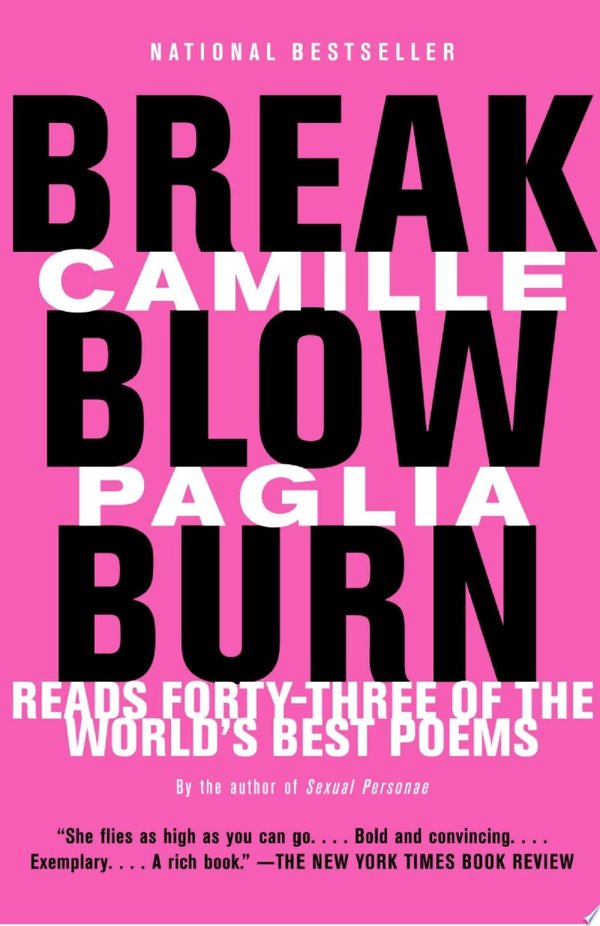
by Camille Paglia · Pantheon
America’s most provocative intellectual brings her blazing powers of analysis to the most famous poems of the Western tradition—and unearths some previously obscure verses worthy of a place in our canon. Combining close reading with a panoramic breadth of learning, Camille Paglia sharpens our understanding of poems we thought we knew, from Shakespeare to Dickinson to Plath, and makes a case for including in the canon works by Paul Blackburn, Wanda Coleman, Chuck Wachtel, Rochelle Kraut—and even Joni Mitchell. Daring, riveting, and beautifully written, Break, Blow, Burn is a modern classic that excites even seasoned poetry lovers—and continues to create generations of new ones.

by Jeffrey D. Sachs · Penguin Press
"Hailed by The New York Times as 'probably the most important economist in the world', Jeffrey Sachs is internationally renowned for his work around the globe advising economies in crisis. Now he draws on all he has learned from twenty-five years of work to offer a uniquely informed vision of the keys to economic success in the world today and the steps that are necessary to achieve prosperity for all." "Marrying storytelling with analysis, Jeffrey Sachs explains why, over the past two hundred years, wealth has diverged across the planet and why the poorest nations have so far been unable to improve their lot. He explains how to arrive at an in-depth diagnosis of a country's economic challenges and the options it faces. He leads readers along the same learning path he himself followed, telling the stories of his own work in Bolivia, Poland, Russia, India, China and Africa to bring us to a deep understanding of the challenges faced by developing nations in different parts of the world. Finally, he offers an integrated set of solutions to the interwoven economic, political, environmental and social problems that most challenge the world's poorest countries and, indeed, the world."--BOOK JACKET.
Historical bestseller data sourced from the New York Times Book Review, archived by Hawes Publications.